
Blog post overview and metadata
Author, publish date, read time, and category
MVP Development Cost UK: How Founders Budget for Version One
Reviewed by: ARS Developer Team | Updated: 30 Sep 2026 | UK Focus: Buyer-intent SEO, web delivery, and measurable conversion growth.
Quick Summary
A founder-focused UK MVP cost guide explaining what changes budget, what should be included in version one, and how to avoid overspending early.
In This Guide
Why This Article Is Trustworthy
- Reviewed by the ARS Developer editorial team for UK business relevance.
- Structured around buyer-intent SEO, technical delivery, and measurable conversion outcomes.
- Connected to related service pages, pricing guidance, and supporting articles for stronger topic depth.
Quick Answer
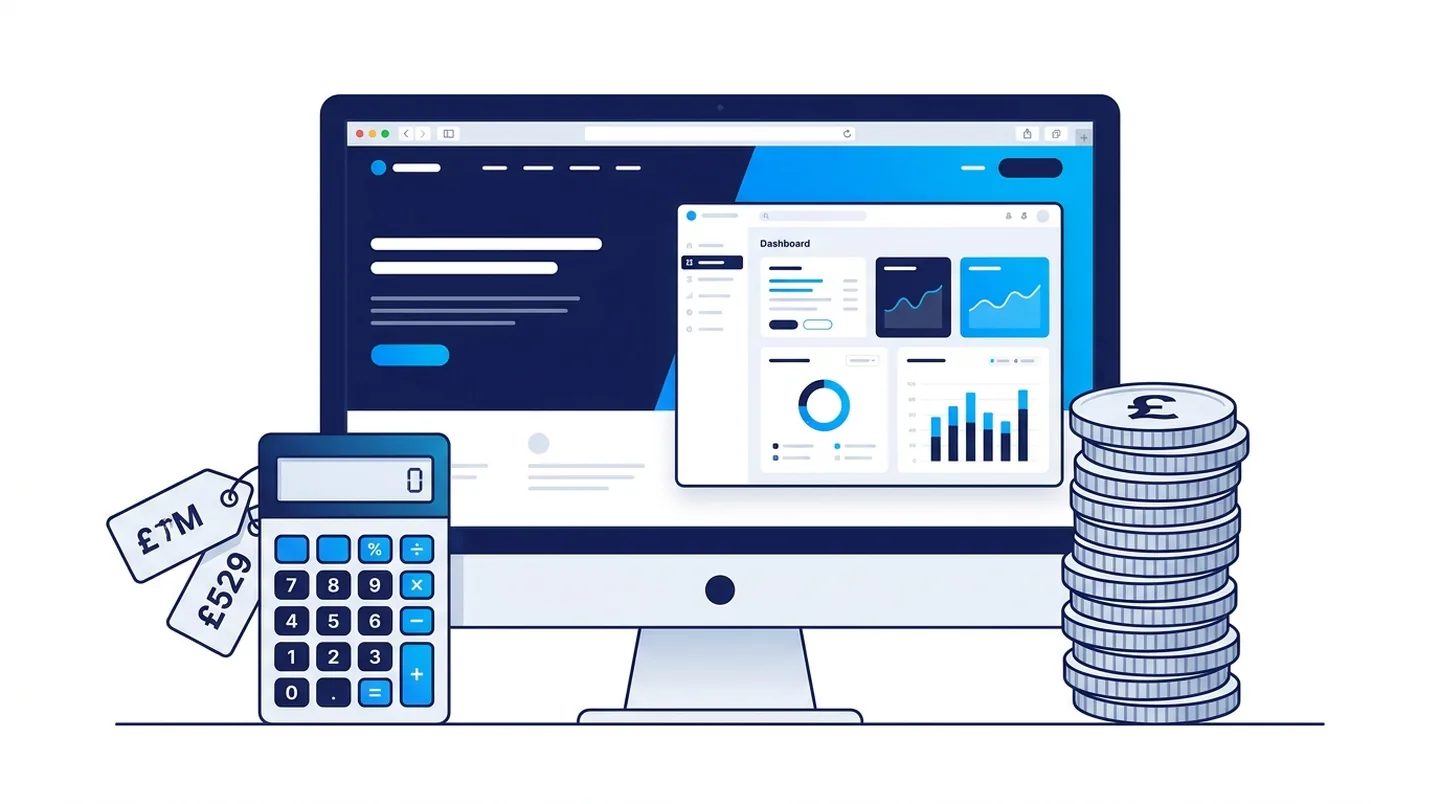
MVP development cost in the UK depends on the number of workflows, roles, integrations, and design depth needed to prove version one successfully.
Founders usually budget more safely when they define what must prove demand first and what can be delayed until learning happens.
What changes MVP cost most
- Workflow complexity and number of core screens.
- Authentication, payments, and permissions.
- Integration requirements and admin tooling.
- Testing scope, hosting setup, and early support.
Why overbuilding destroys early-stage budget
Many founders overspend by building edge cases, analytics layers, or advanced features before they know whether the core offer will retain users.
A cleaner version-one scope works better with MVP feature prioritisation, subscription product planning, and budget-sensitive software architecture.
How founders should frame discovery
Discovery should define the user problem, the activation path, the billing or commercial model, and what evidence will prove the MVP is working.
That framework leads to better project decisions than starting with a long features spreadsheet.
Budget against runway, not against the feature list
The useful question is not what version one costs but how many funded attempts you get. A founder with twelve months of runway who spends nine on the first build has one attempt; the same budget split into three releases has three, and the second and third are informed by real users.
That arithmetic should decide the scope. Whatever can be learned from a smaller release is worth more than whatever is gained by launching a larger one later, because the first version is mostly a way of finding out which assumptions were wrong.
The features founders build too early
A recurring pattern: an admin panel before there are enough customers to administer, team accounts and invitations before anyone has asked for a colleague, a settings page full of options nobody has requested, and an analytics dashboard that reports on data that does not exist yet.
Each of these is real work and none of it tests whether the product is wanted. Most can be replaced for months by a database client and a founder willing to do the task manually — which has the side effect of teaching you what the feature should actually do.
Frequently Asked Questions
Should an MVP include admin tools on day one?
Only if the team cannot operate the product safely without them. Otherwise basic internal tools are often enough for version one.
How do founders keep MVP cost under control?
By cutting non-essential features, using milestone scope, and agreeing a clear version-one success definition before development begins.
Next Step
For version-one planning, explore our software development service and book a founder discovery call.
Next Step Resources
Move from research into action with the most relevant service, proof, pricing, and project planning pages for this topic.

Tags:
















































Leave a Comment
Ask a practical question, share a project insight, or add a useful note. Every comment is reviewed before it appears publicly.