

Blog post overview and metadata
Author, publish date, read time, and category
9 Manual Processes UK SMEs Should Automate First (With Realistic Costs)
Reviewed by: ARS Developer | Updated: 31 Jul 2026 | UK Focus: Buyer-intent SEO, web delivery, and measurable conversion growth.
Quick Summary
Not every manual task is worth automating. This guide ranks the nine processes UK SMEs should tackle first — each with realistic weekly time cost, a GBP build band, and a payback period — plus a simple matrix for deciding what to leave alone for now.
In This Guide
- Why workflow automation UK projects fail before they start
- What should be automated first?
- The 9 processes to automate first (with realistic costs)
- The Automation Priority Matrix: how to choose your order
- What NOT to automate yet
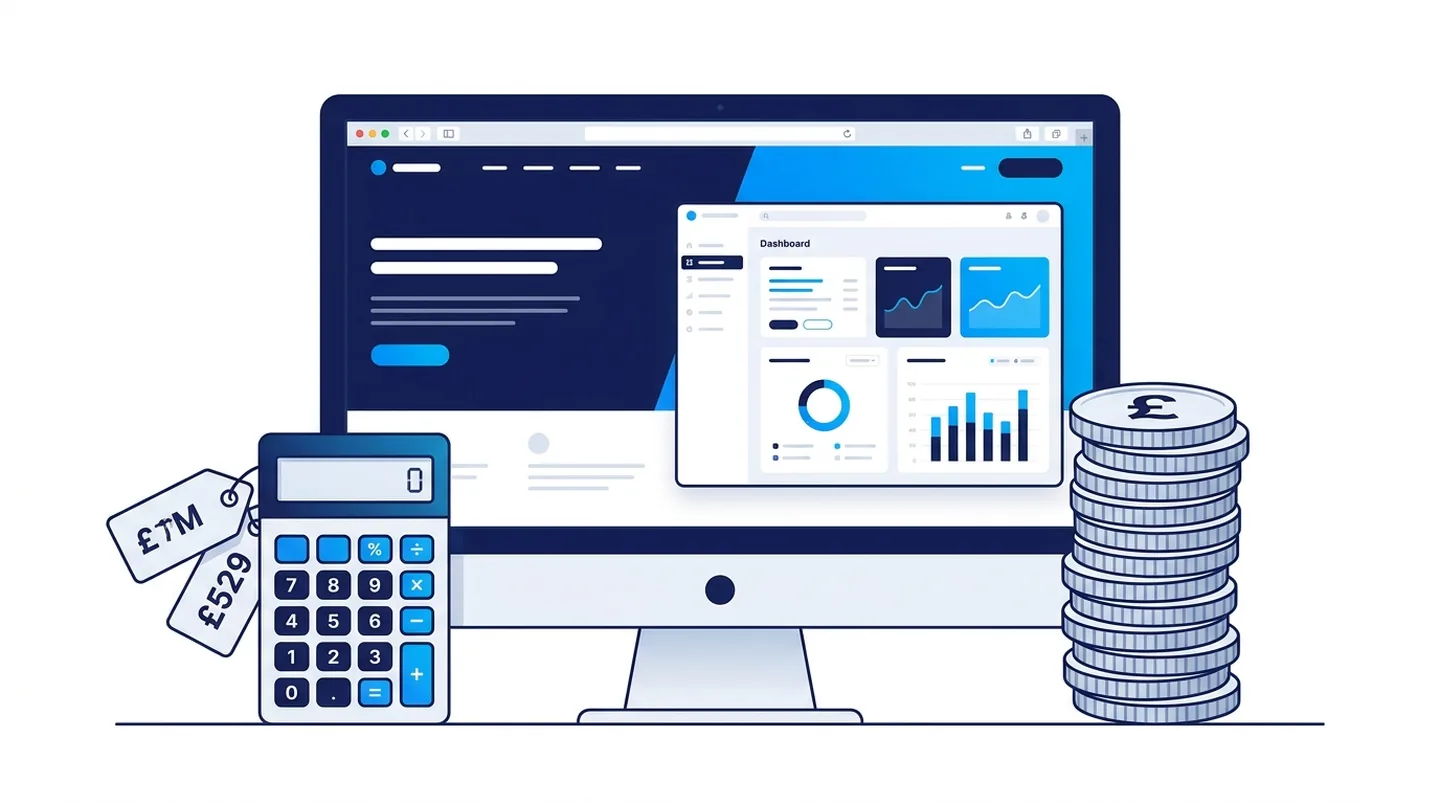
- How much does workflow automation cost in the UK?
- Frequently asked questions
- Where to start
Why This Article Is Trustworthy
- Reviewed by the ARS Developer editorial team for UK business relevance.
- Structured around buyer-intent SEO, technical delivery, and measurable conversion outcomes.
- Connected to related service pages, pricing guidance, and supporting articles for stronger topic depth.
Workflow automation UK projects pay back fastest when you start with high-volume, repetitive admin — not the flashy stuff. The nine processes below (enquiry-to-CRM, quote follow-ups, reminders, invoice chasing and more) typically cost £600–£8,000 to automate and recover their build cost within 2–9 months for a UK SME handling 20+ enquiries a week.
Most owners we meet don't have an automation problem — they have a prioritisation problem. There are 40 things you could automate, a limited budget, and a nagging worry you'll spend £5,000 building something that saves ten minutes a month. This guide fixes that. We're ARS Developer, a software development company in Stoke-on-Trent, and we've built workflow automation for UK trades, clinics, agencies and B2B firms. Below are the nine processes worth automating first, with honest costs, and a framework for deciding the order.
Why workflow automation UK projects fail before they start
The failure isn't technical. It's that people automate whatever annoys them most on the day they sign off the budget, rather than what quietly costs the most across the year. Business process automation UK done well is boring and measurable: pick the tasks that repeat dozens of times a week, cost real hours, and follow predictable rules.
Across 50+ UK projects we've delivered, the pattern we see most is this: a single admin person is spending 8–12 hours a week on copy-paste work — moving an enquiry from the website into a spreadsheet, then into email, then into the accounting tool. Nobody logs those hours because they're spread in five-minute chunks. That invisible time is exactly where automation ROI UK is strongest.
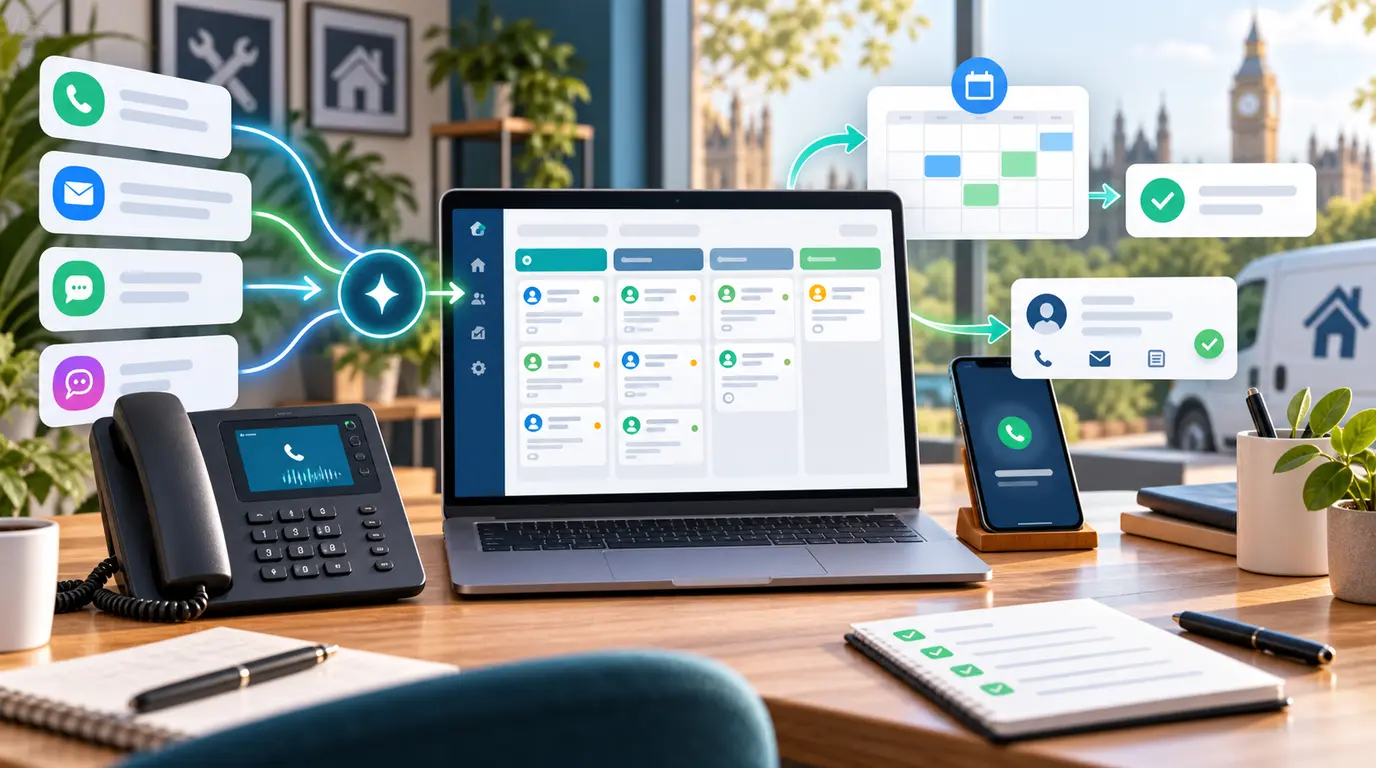
A quick definition, because the word gets thrown around loosely. Workflow automation is software that carries out a repeatable business task — moving data, sending a message, updating a record — automatically when a trigger happens, without someone doing it by hand each time. That's it. No robots, no AI hype required.
What should be automated first?
Automate first the tasks that are high-volume, rule-based, and directly tied to revenue or cash — typically capturing enquiries, chasing quotes, and collecting payment. These repeat constantly, follow clear "if this, then that" logic, and every hour saved or sale recovered shows up in the bank, giving the shortest payback.
Everything in this article is ordered roughly by that logic: money-in and money-chased before internal tidiness. Here's the shortlist, then we'll go through each one with real numbers.
The 9 processes to automate first (with realistic costs)
The GBP bands below are build cost ranges we see in the UK market in 2026 — a lightweight version using tools you already own at the low end, a custom-built version at the high end. "Time cost/week" assumes a typical SME doing meaningful volume; scale it to your own numbers.
| Process | Manual time/week | Approach | Build band (GBP) | Typical payback |
|---|---|---|---|---|
| 1. Enquiry-to-CRM capture | 2–4 hrs | Form → CRM/email auto-log | £600–£2,500 | 1–3 months |
| 2. Quote follow-ups | 2–3 hrs | Scheduled reminder sequence | £800–£3,000 | 2–4 months |
| 3. Appointment reminders | 2–5 hrs | SMS/email before booking | £700–£2,500 | 1–3 months |
| 4. Invoice chasing | 2–4 hrs | Auto-reminders on overdue | £600–£2,800 | 1–2 months |
| 5. Document collection | 3–6 hrs | Client upload portal + chasers | £2,500–£8,000 | 4–9 months |
| 6. Staff rotas / job assignment | 3–6 hrs | Rules-based scheduling tool | £3,000–£8,000 | 5–9 months |
| 7. Review requests | 1–2 hrs | Post-job auto-ask | £500–£2,000 | 1–3 months |
| 8. Stock reorder alerts | 1–3 hrs | Threshold-triggered alerts | £800–£3,500 | 3–6 months |
| 9. Monthly reporting | 3–5 hrs | Auto-pulled dashboard | £1,500–£5,000 | 4–8 months |
1. Enquiry-to-CRM capture
The classic leak. A lead fills in your contact form, the email lands in a shared inbox, and someone eventually copies it into a spreadsheet or CRM — if they remember. Automating this means every enquiry is logged, tagged and assigned the moment it arrives, with an instant acknowledgement to the customer. Fast response is money: leads contacted within five minutes are far more likely to convert than those left overnight. Low end (£600–£1,200) connects your existing form to your CRM; higher end builds a custom pipeline with lead scoring.
2. Quote follow-ups
Most quotes that go cold aren't rejected — they're forgotten, by both sides. A follow-up sequence sends a polite nudge at day 2, day 7 and day 14 automatically, pausing the moment the client replies or accepts. For a firm sending 15 quotes a week at an average job value of £800, recovering even two extra jobs a month makes this the single highest-ROI item on the list. This is where "automate manual tasks small business" advice earns its keep.
3. Appointment reminders
No-shows are pure lost revenue for clinics, salons, garages and consultants. An automated SMS or email 24 hours before the slot — with a one-tap reschedule link — typically cuts no-shows by a meaningful margin. If your booked slots are worth £60 each and reminders save four no-shows a month, that's £240 recovered monthly against a modest build cost.
4. Invoice chasing
Late payment is a chronic drag on UK SME cash flow. Automated chasing sends a friendly reminder the day an invoice falls due, then escalates on a schedule you control, stopping instantly when payment clears. It removes the awkward "have you paid yet" conversation and shortens the gap between work done and cash in. This is often the fastest payback of all — usually 1–2 months — because it protects money you've already earned.
5. Document collection
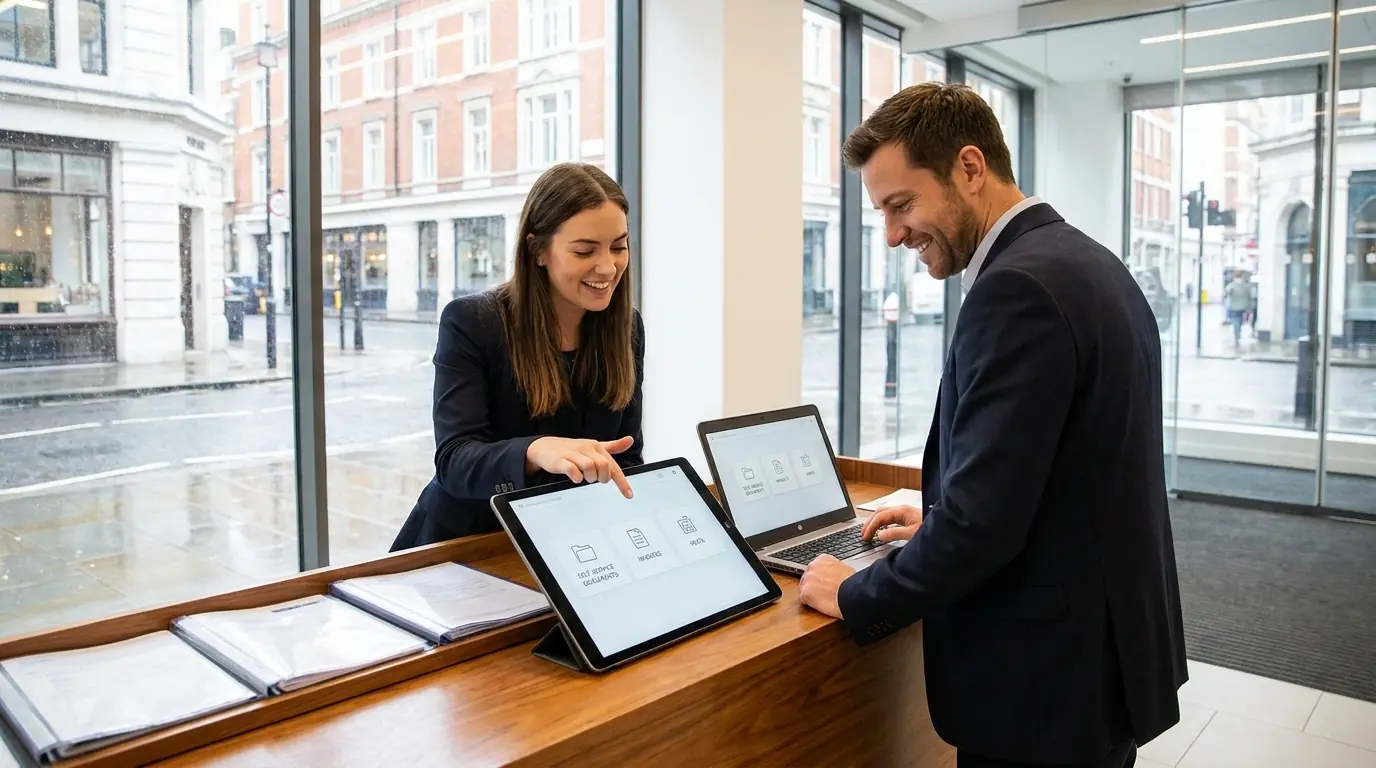
Accountants, solicitors, lettings agents and onboarding teams lose hours chasing signed forms, ID and files by email. A secure client portal lets customers upload everything in one place, with automatic reminders for what's missing. It's a bigger build, which is why we've written a full breakdown of customer portal development costs for UK service firms — worth reading before you budget for this one.
6. Staff rotas and job assignment
For field teams and multi-site operations, building the weekly rota or assigning jobs by hand eats a manager's Friday afternoon. Rules-based scheduling — matching availability, skills, location and priority — turns that into a review-and-approve task. Higher cost and longer payback, but it removes a bottleneck that only gets worse as you grow.
7. Review requests
Google reviews drive local search and trust, yet most businesses ask sporadically. An automated request sent the day after a job completes — timed for the moment satisfaction is highest — steadily builds your review count with zero ongoing effort. Cheap to build, compounding in value.
8. Stock reorder alerts
Running out of a key product or part costs sales and emergency-order premiums. Threshold alerts flag when stock drops below a set level and can draft the reorder automatically. Best for retail, trades carrying materials, and workshops.
9. Monthly reporting
Someone in your team is stitching numbers from three systems into a spreadsheet every month. An automated dashboard pulls those figures live, so the report exists whenever you open it. The saving is real, but because reporting happens monthly not daily, it sits lower on the priority list than daily-volume tasks.
The Automation Priority Matrix: how to choose your order
Rather than argue about which of the nine matters most to you, plot them. The Automation Priority Matrix — our named framework — scores each candidate process on two axes: impact (hours saved plus revenue protected per month) and effort (build cost and complexity). Four quadrants tell you what to do:
- Quick wins (high impact, low effort): do these first. Enquiry capture, invoice chasing, appointment reminders, review requests usually land here.
- Major projects (high impact, high effort): plan and budget properly. Document portals, rota systems, reporting dashboards.
- Fill-ins (low impact, low effort): do them when convenient, not before a quick win.
- Money pits (low impact, high effort): leave alone. Automating a task you do twice a year belongs here.
The discipline is simple: never start a major project while a quick win is still manual. We've watched firms spend £8,000 on a rota system while enquiries still fell out of a shared inbox — solving the harder problem and leaving the free money on the table.
Score each process in five steps
- Count the volume. How many times a week does this task happen? Under five, deprioritise.
- Time one instance. Multiply by weekly volume to get hours lost.
- Add the revenue effect. Does automating it recover sales or cash (follow-ups, chasing) or only save time (reporting)?
- Estimate the build band. Use the table above as a starting point.
- Plot and sequence. Quick wins this quarter, major projects next.
What NOT to automate yet
Honesty matters more than an upsell here. Hold off automating anything that is low-volume (happens a handful of times a year), still changing shape (a process you're actively redesigning), or genuinely judgement-heavy — pricing a complex bespoke job, handling a sensitive complaint, or a first sales conversation where relationship beats speed.
Also resist automating a broken process. Automation makes whatever you do happen faster and more often — if the underlying steps are muddled, you'll simply produce mistakes at scale. Fix the process on paper first, run it manually until it's stable, then automate. The best business process automation UK results come from clean processes, not clever software papering over a messy one.
How much does workflow automation cost in the UK?
For UK SMEs in 2026, a single automated workflow typically costs £600–£3,500 to build using or extending tools you already own, while custom multi-step systems (portals, scheduling, live dashboards) run £3,000–£8,000+. Most quick-win automations recover their workflow automation cost within 1–4 months through saved hours and recovered revenue.
Two things drive the number. First, whether you're connecting existing tools (cheaper) or building bespoke logic your tools can't handle (more). Second, how many exceptions the process has — a rule with three neat branches is quick; one with fifteen "except when…" cases takes real engineering. When you scope a project, ask for the exception list up front; it's the honest predictor of cost.
You don't always need custom software. Plenty of quick wins run on connectors between the tools you already pay for. Custom development earns its place when off-the-shelf tools can't model your logic, when data must move securely between systems, or when the workflow is a competitive advantage worth owning. If you're weighing that decision, our custom software development page explains when bespoke beats off-the-shelf, and our services overview shows how automation fits alongside websites and CRM work.
Frequently asked questions
What processes should be automated first?
Automate high-volume, rule-based tasks tied to revenue or cash first: capturing enquiries into your CRM, chasing quotes, sending appointment reminders and chasing invoices. These happen constantly, follow clear logic, and pay back within one to four months. Save judgement-heavy or low-frequency tasks for later, once the quick wins are live.
How much does workflow automation cost in the UK?
A single automated workflow usually costs £600–£3,500 to build in the UK, depending on whether you're connecting existing tools or building custom logic. Larger systems like client portals, staff scheduling or live dashboards run £3,000–£8,000+. Quick-win automations typically recover their cost within one to four months.
What is workflow automation with an example?
Workflow automation is software that performs a repeatable task automatically when a trigger fires. Example: a customer submits your website enquiry form (trigger), and the system instantly logs them in your CRM, tags the lead, emails them an acknowledgement and notifies your team — all without anyone copying and pasting anything by hand.
Can automation work with my existing tools?
Usually, yes. Most CRMs, accounting packages, booking systems and email tools can be connected so data flows between them automatically, which keeps costs down. Custom development is only needed when your tools can't model the logic you need or data must move securely between systems that don't natively talk to each other.
Do I need custom software to automate?
Not always. Many quick wins — enquiry capture, invoice chasing, review requests — run on connectors between tools you already own. Custom software becomes worthwhile when off-the-shelf options can't handle your rules, when you need a secure client-facing portal, or when the workflow itself is a competitive advantage you want to own outright.
How quickly does automation pay for itself?
Quick-win automations like invoice chasing and enquiry capture typically pay back in one to four months, because they save hours weekly and protect revenue you've already earned. Larger builds such as portals, rota systems and dashboards usually recover their cost in four to nine months, depending on your volume and the hours displaced.
Where to start
Pick your two clearest quick wins from the matrix — most UK SMEs land on enquiry capture and invoice chasing — and cost them properly before touching anything bigger. As ARS Developer, a software development company in Stoke-on-Trent, we scope automation with clear milestones and no payment until you approve the work, so you can see the numbers before you commit.
Want a second opinion on which processes will pay back fastest for your business? Book a free 30-minute discovery call with the founder — we'll map your top automation candidates on the Priority Matrix and give you realistic GBP bands, with a response within one business day.
Next Step Resources
Move from research into action with the most relevant service, proof, pricing, and project planning pages for this topic.

Tags:




































Leave a Comment
Ask a practical question, share a project insight, or add a useful note. Every comment is reviewed before it appears publicly.