

Blog post overview and metadata
Author, publish date, read time, and category
Quoting & Invoicing Automation for UK Trades and Service Firms: From Enquiry to Paid
Reviewed by: ARS Developer | Updated: 31 Jul 2026 | UK Focus: Buyer-intent SEO, web delivery, and measurable conversion growth.
Quick Summary
Every trade and service firm leaks money between the enquiry and the paid invoice. This guide maps the quote-to-cash pipeline, shows where jobs and cashflow slip away, and compares custom portals with off-the-shelf job management tools in plain GBP terms.
In This Guide
- Why the enquiry-to-paid pipeline is where money actually leaks
- How quickly should you send a quote?
- Should you automate quote follow-ups?
- The Quote-to-Cash Scorecard: rate your pipeline before you buy anything
- Late invoicing is a silent cashflow killer
- Custom portal vs off-the-shelf: an honest comparison
- What good job management software for trades actually does
- How much does quoting and invoicing automation cost?
Why This Article Is Trustworthy
- Reviewed by the ARS Developer editorial team for UK business relevance.
- Structured around buyer-intent SEO, technical delivery, and measurable conversion outcomes.
- Connected to related service pages, pricing guidance, and supporting articles for stronger topic depth.
Quoting software for trades UK automates the journey from enquiry to paid invoice, cutting quote turnaround from days to hours and recovering the 30-50% of jobs lost to slow or missing follow-up. Off-the-shelf tools cost roughly £20-£70 per user per month; a custom portal typically costs £6,000-£25,000 to build once.
At ARS Developer, a software development company in Stoke-on-Trent, we spend a lot of time inside the operations of UK trades and service firms: electricians, plumbers, roofers, HVAC engineers, cleaning companies, landscapers, pest control, and B2B maintenance outfits. The pattern is almost always the same. The work is good. The pricing is fair. And yet money quietly drains away between the moment someone enquires and the moment the invoice clears. This guide maps that entire pipeline, shows you exactly where the leaks are, and gives you an honest comparison of building your own system versus buying quoting software off the shelf.
Why the enquiry-to-paid pipeline is where money actually leaks
Most owners think their growth problem is a marketing problem: not enough enquiries. In our experience it is far more often a conversion and cashflow problem hiding inside the pipeline you already have. You are paying for leads through Google, your van signage, and word of mouth, then losing a large share of them to admin friction that has nothing to do with the quality of your work.
The pipeline has seven stages, and every single one has a specific, measurable leak:
- Enquiry — the phone rings while you are up a ladder, the web form lands in a spam folder, or the WhatsApp message gets buried. The lead is never logged.
- Site visit / triage — you drive out to price a job that was never going to convert, burning half a day of billable time.
- Quote — you mean to write it up on the weekend. It goes out four days later, by which point a faster competitor has already been booked.
- Follow-up — you send one quote and never chase it. This is the single biggest leak we see.
- Job — scheduling clashes, forgotten variations, and materials not logged against the job erode margin.
- Invoice — the job finishes Friday, the invoice goes out three weeks later when you finally sit down to paperwork.
- Chase — the invoice is overdue, but chasing feels awkward, so it drifts to 60 or 90 days.
Across 50+ UK projects we have delivered, the pattern we see most is that firms obsess over stage one (more leads) while ignoring stages three, four, and six, which is where the real recoverable money sits. Fixing follow-up and invoicing usually returns more profit than doubling the marketing budget, and it costs a fraction as much.
How quickly should you send a quote?
Send the quote within 24 hours, ideally the same working day. Speed is the strongest predictor of winning the job. When a customer has three trades round to price the same work, the one who quotes first is often booked before the others have even started writing theirs, especially on emergency and reactive work.
The commercial logic is blunt. A homeowner with a leaking roof or a broken boiler is anxious and wants certainty. The first credible, professional quote that lands relieves that anxiety, and relieved customers stop shopping. We have seen firms lift their win rate by a double-digit percentage simply by getting quotes out same-day instead of "sometime this week". Quoting software for trades UK matters here because it lets you build a quote from templated line items and pricing on your phone before you have left the driveway, rather than facing a blank document at 9pm.
Should you automate quote follow-ups?
Yes. Automating quote follow-ups is the highest-return change most service firms can make, because the majority of quotes are never chased even once. Industry norms across UK service sectors suggest that consistent follow-up recovers a meaningful share of quotes that would otherwise go silent, often in the region of 30-50% of otherwise-lost jobs.
The mechanism is simple and human. A "no reply" is rarely a "no". It usually means the customer got busy, is comparing prices, or is waiting on a partner or a payday. A short, polite, automated sequence, for example a nudge at day two, a check-in at day five, and a final "shall we release your slot?" at day ten, does the chasing you never get round to. This is quote follow-up automation: the system sends the messages on schedule and stops the moment the customer replies or accepts.
One first-hand observation from our builds: the "release your slot" message consistently outperforms the softer nudges. Loss aversion works. Customers who ignored two friendly reminders reply within minutes when they think a booking window is about to disappear.
The Quote-to-Cash Scorecard: rate your pipeline before you buy anything
Before you spend a penny on job management software for trades or a custom build, diagnose where you are actually losing money. We developed the Quote-to-Cash Scorecard to do exactly this. Score each of the seven stages from 0 (no system, relies on memory) to 3 (automated and measured). A total under 12 means you are almost certainly leaking recoverable revenue right now.
- Capture — Is every enquiry, from every channel (phone, form, WhatsApp, Google), logged automatically in one place? (0-3)
- Speed — Do quotes reliably go out within 24 hours? (0-3)
- Consistency — Are quotes built from templates and priced the same way every time, regardless of who writes them? (0-3)
- Follow-up — Does every unanswered quote get chased at least three times automatically? (0-3)
- Job visibility — Can you see the status, schedule, and materials of every live job without asking anyone? (0-3)
- Invoice speed — Does an invoice go out within 48 hours of job completion? (0-3)
- Getting paid — Are overdue invoices chased automatically, with online payment built in? (0-3)
Add up your score out of 21. In our assessments, most owner-run trade firms land between 6 and 11 before any system is in place, and the two lowest-scoring stages are nearly always follow-up and invoice speed. Fix those two first; they are the cheapest to improve and the fastest to pay back.
Late invoicing is a silent cashflow killer
Slow quotes lose you jobs. Slow invoices lose you the use of money you have already earned. When you complete work on the 1st but invoice on the 21st, then offer 30-day terms, you have effectively lent the customer your labour and materials for seven or eight weeks before a single pound arrives. Multiply that across every job and you understand why profitable firms still feel permanently short of cash.
Invoicing automation UK tools fix this by generating the invoice the moment a job is marked complete, emailing it instantly, and starting a polite chase sequence automatically when it becomes overdue. Add a "pay now" card link and you remove the friction that keeps customers from settling. The goal is straightforward: shrink the gap between finishing the work and seeing the money, so you can get paid faster small business owners keep more cash in the business and borrow less to bridge the gap.
A realistic before-and-after
Consider a firm doing £400,000 a year with, say, 45 days average time-to-payment. Pull that down to 20 days through faster invoicing and automated chasing and you free up roughly a month of working capital, often tens of thousands of pounds, without winning a single extra job. That is money that stops sitting in customers' bank accounts and starts sitting in yours.
Custom portal vs off-the-shelf: an honest comparison
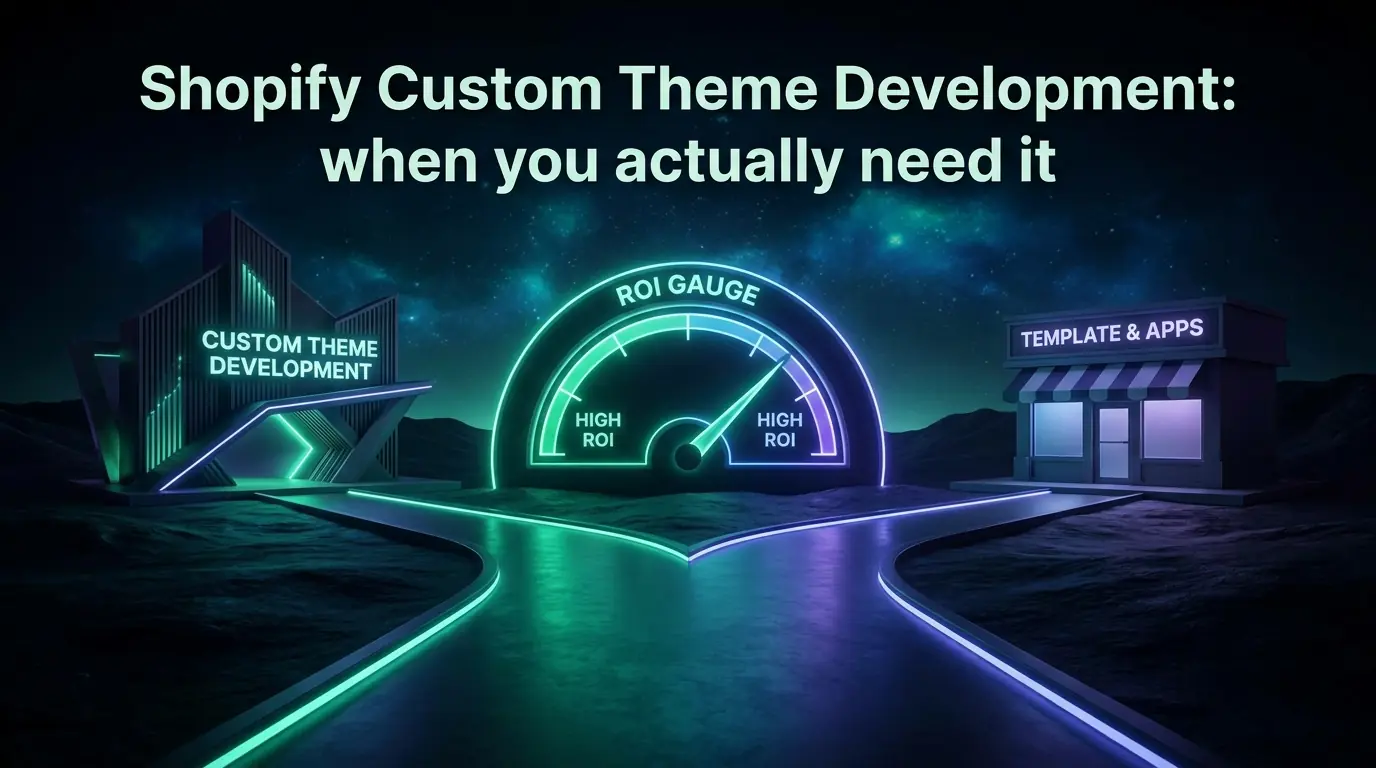
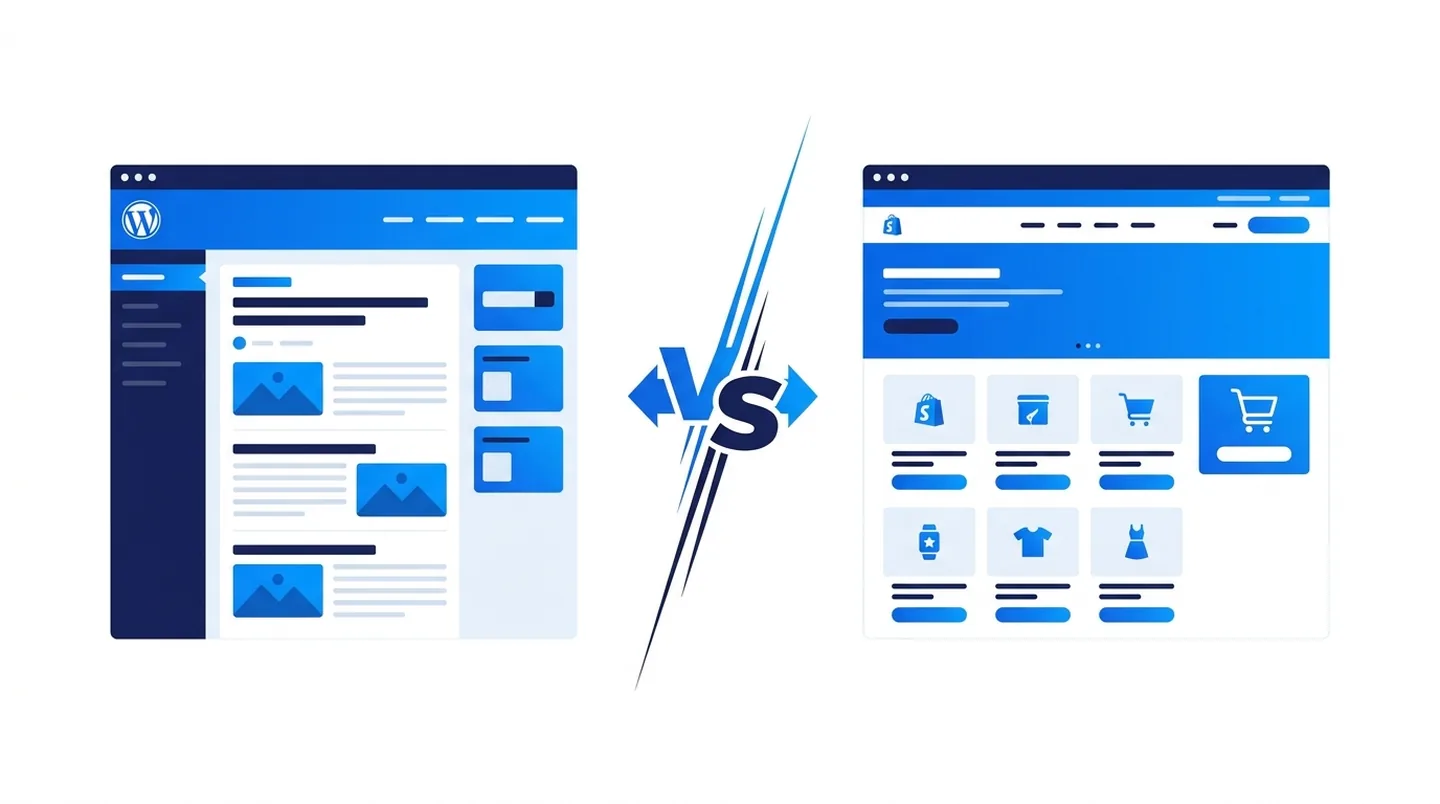
This is the question every owner reaches eventually. Off-the-shelf platforms in the Tradify, Jobber, Commusoft, and simPRO family are excellent for standard workflows and are the right first step for most small firms. A custom-built system, like the ones we design, earns its place when your process is unusual, when per-seat fees start to sting at scale, or when you want the software to be a genuine competitive asset rather than the same tool your rivals use.
Here is the honest trade-off in GBP.
| Factor | Off-the-shelf (Tradify / Jobber style) | Custom portal (built for you) |
|---|---|---|
| Upfront cost | £0 to a few hundred £ setup | £6,000-£25,000 typical build |
| Ongoing cost | ~£20-£70 per user / month (scales with headcount) | Hosting ~£20-£100/month + optional support retainer |
| Time to live | Days | 4-10 weeks depending on scope |
| Fits your exact process | Mostly — you adapt to it | Fully — it adapts to you |
| Cost as you grow | Rises with every new user | Flat — you own it |
| You own the data & IP | No — you rent access | Yes |
| Best for | 1-15 users, standard workflows | Established firms, unusual processes, scaling teams |
The tipping point is usually a mix of headcount and process quirk. As a rough guide, once you are paying £400-£600 a month in per-seat fees and still exporting data into spreadsheets to make the tool fit how you actually work, a custom build starts to pay for itself within 18-30 months, and you own it forever after that. If you are a two-person firm with a textbook workflow, stay off-the-shelf and reinvest the difference in marketing. We will tell you honestly which side of that line you sit on. For a deeper look at the build side, see our guide to customer portal development costs for UK service firms.
What good job management software for trades actually does
Whether you buy or build, the same capabilities separate a system that pays for itself from a glorified digital notebook. Use this as your feature checklist when you evaluate options:
- One inbox for enquiries — every channel captured and logged automatically, nothing lost to a missed call.
- Mobile quoting — build and send a branded quote from site, from templated line items, in minutes.
- Automated follow-up sequences — chase every unanswered quote without lifting a finger.
- Scheduling and job cards — assign work, track status, log materials and photos against each job.
- One-click invoicing — generate and send the invoice the moment a job is done.
- Automated payment chasing — polite overdue reminders plus an online "pay now" link.
- Accounts sync — clean two-way link with Xero, QuickBooks, or Sage so you are not re-keying anything.
- Reporting you will actually read — win rate, average quote time, and time-to-payment on one screen.
A note on that last point. The firms that improve fastest are the ones that can see their numbers. If your current setup cannot tell you your quote win rate or your average days-to-payment, you are flying blind, and blind firms do not know which leak to plug first.
How much does quoting and invoicing automation cost?
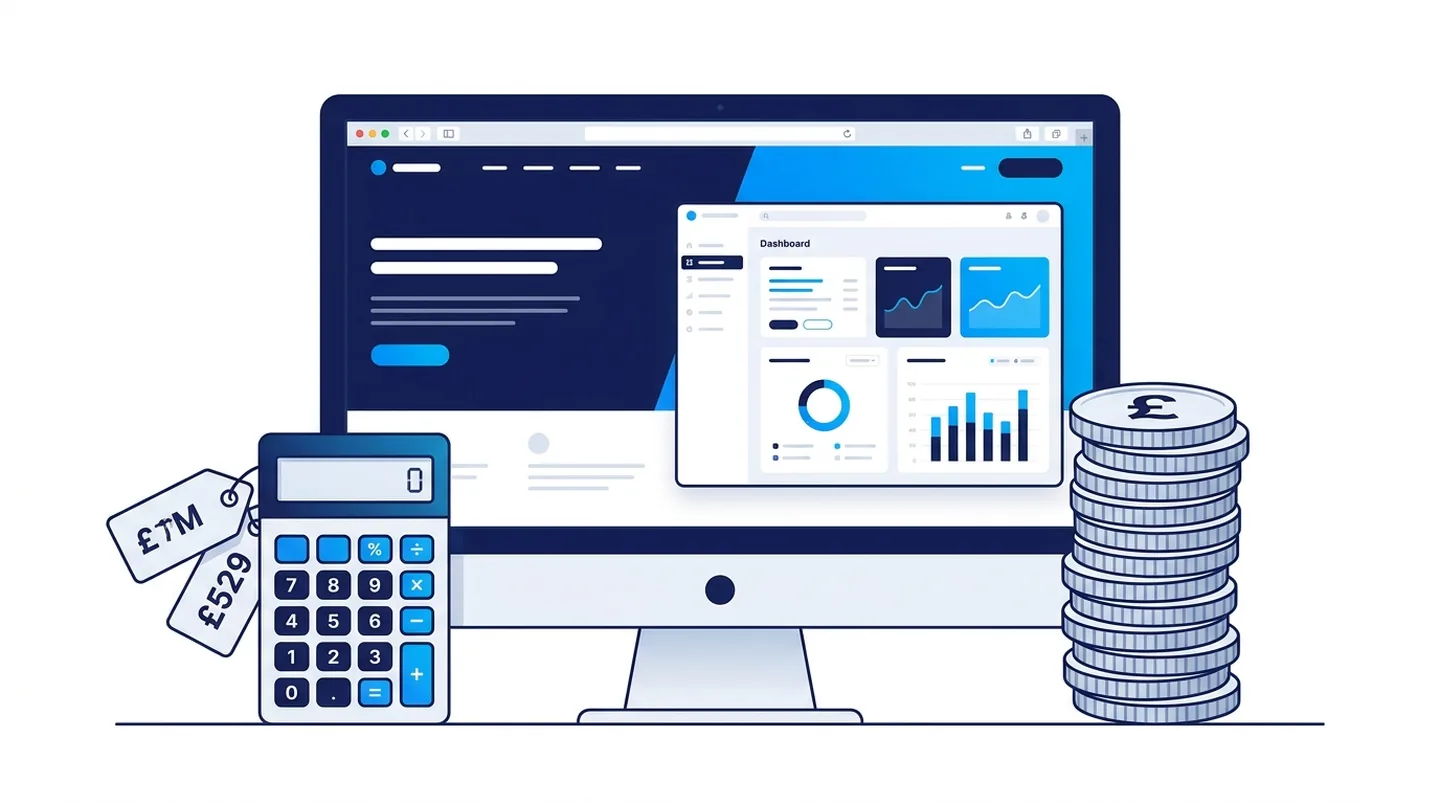
For off-the-shelf job management software expect roughly £20-£70 per user per month, so a five-person firm might spend £1,200-£4,200 a year, rising as you hire. A tailored automation layer or custom portal is typically a one-off £6,000-£25,000 build, plus modest hosting from around £20-£100 a month, after which you own it outright.
The right question is not "what does it cost" but "what is the current leak costing me". If missing follow-up loses you even one £2,000 job a month, that is £24,000 a year walking out the door, comfortably more than most custom builds. We price transparently and take no payment until you approve the work; you can see how we structure this on our pricing page, and read how we scope bespoke systems on our software development service page.
Frequently asked questions
What is the best quoting software for UK trades?
There is no single best; it depends on your size and workflow. For most small UK trades, off-the-shelf tools like Tradify, Jobber, or Commusoft (£20-£70 per user per month) are the sensible starting point. Established firms with unusual processes or growing teams often outgrow per-seat pricing and benefit from a custom-built portal they own outright.
How can I get invoices paid faster?
Invoice within 48 hours of finishing the job, include a one-click online payment link, and set up automatic reminders for overdue accounts. These three changes alone typically cut average time-to-payment from around 45 days to 20 or fewer, freeing up significant working capital without winning any extra work.
How quickly should I send a quote?
Within 24 hours, and same-day whenever possible. On reactive and emergency work the first credible quote to land often wins the job before competitors have started writing theirs. Mobile quoting from templated pricing lets you send a professional quote before you have left the customer's driveway.
Should I automate quote follow-ups?
Yes — it is usually the single highest-return automation for a service firm. Most quotes are never chased, yet a simple three-touch sequence over roughly ten days recovers a large share of otherwise-lost jobs, often in the 30-50% range. The system stops automatically the moment the customer replies or accepts.
Custom system or off-the-shelf job management software?
Start off-the-shelf if you are a small firm with a standard workflow. Consider a custom build once per-seat fees exceed roughly £400-£600 a month, your process no longer fits the tool, or you want the software as a competitive asset. A custom portal (£6,000-£25,000) then typically pays back within 18-30 months.
How much does quoting automation cost?
Off-the-shelf: about £20-£70 per user per month. Custom: a one-off £6,000-£25,000 build plus £20-£100 a month hosting, which you then own. Weigh either figure against your current leak — losing even one mid-sized job a month to poor follow-up usually costs more than the system does.
Turn your pipeline into a machine that gets you paid
Every stage from enquiry to paid is a place where good firms quietly lose money, and almost all of it is recoverable with the right process and the right software. Score yourself with the Quote-to-Cash Scorecard, fix follow-up and invoice speed first, and choose the tool that fits your size rather than the one with the loudest advert.
ARS Developer, a software development company in Stoke-on-Trent, builds quoting, follow-up, and invoicing systems for UK trades and service firms with founder-led delivery, clear milestones, and no payment until you approve the work. Book a free 30-minute discovery call with the founder and we will map your pipeline and show you exactly where the money is leaking. We respond within one business day.
Next Step Resources
Move from research into action with the most relevant service, proof, pricing, and project planning pages for this topic.

Tags:












































Leave a Comment
Ask a practical question, share a project insight, or add a useful note. Every comment is reviewed before it appears publicly.