

Blog post overview and metadata
Author, publish date, read time, and category
Companies House Identity Verification 2026: What UK Directors Need From Their Software
Reviewed by: ARS Developer | Updated: 08 Sep 2026 | UK Focus: Buyer-intent SEO, web delivery, and measurable conversion growth.
Quick Summary
Companies House identity verification is changing director and PSC admin. UK businesses need cleaner records, reminders, role-based access and compliance workflows that do not depend on one overloaded inbox.
In This Guide
Why This Article Is Trustworthy
- Reviewed by the ARS Developer editorial team for UK business relevance.
- Structured around buyer-intent SEO, technical delivery, and measurable conversion outcomes.
- Connected to related service pages, pricing guidance, and supporting articles for stronger topic depth.
Companies House identity verification is turning company admin into a workflow problem. Directors, people with significant control and presenters need clearer ownership, cleaner records and better reminders. If your compliance process still lives in one inbox and a spreadsheet, 2026 is the year to tidy it up.
The Economic Crime and Corporate Transparency Act has pushed UK company records into a more verification-heavy era. Companies House has confirmed a staged rollout, with identity checks becoming part of the director and PSC experience. The technical detail matters, but the bigger business lesson is simpler: compliance cannot depend on memory.
Why software matters here
Identity verification itself may happen through official routes or authorised providers, but the surrounding workflow belongs to the business. Who has verified? Which director is pending? Which PSC record is incomplete? Who is allowed to submit filings? Which documents support a change? These questions become messy when records are split between email, WhatsApp, old PDFs and an accountant's notes.
A good internal system does not try to replace Companies House. It keeps your own house in order so filings are timely, roles are clear and evidence is easy to find.
The minimum director record
Every UK company should maintain a private operational record for directors and PSCs. It should include name, role, appointment status, verification status, filing responsibility, Companies House reference notes where appropriate, accountant contact, key dates and document links. The point is not to duplicate the public register; it is to create one reliable source for the people running the company.
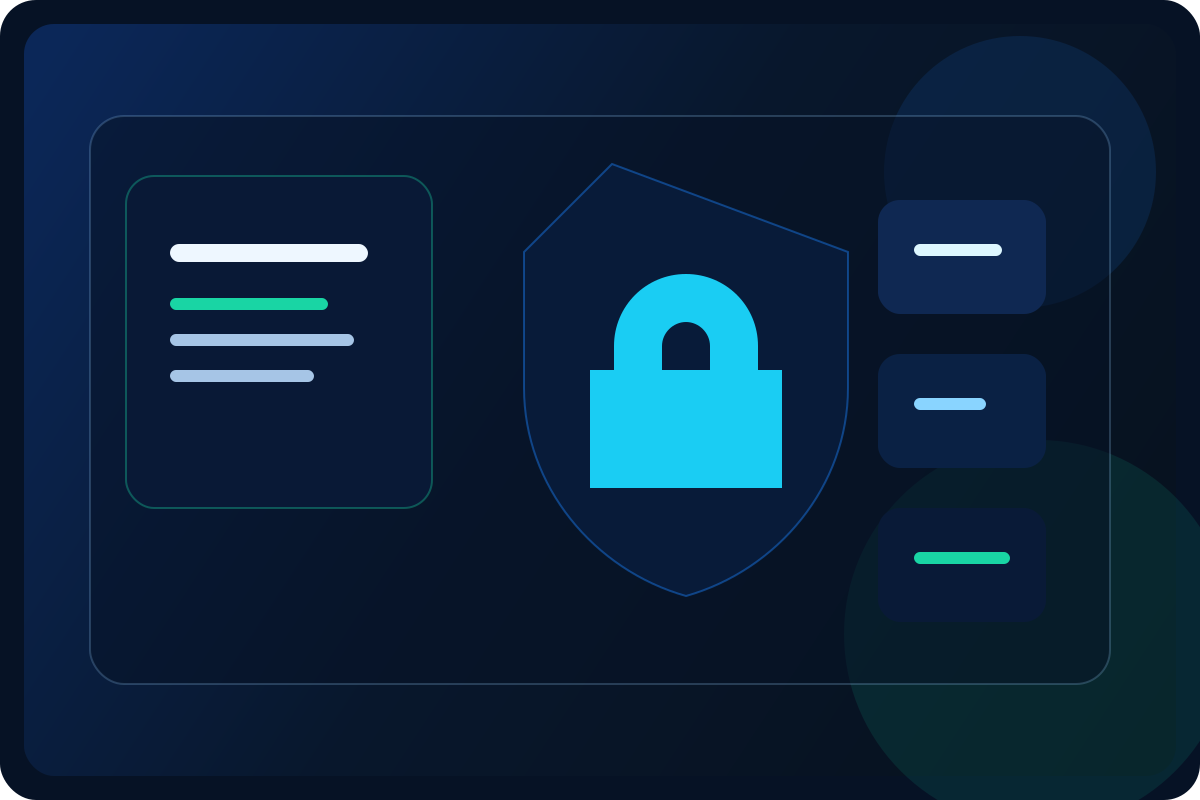
That record should also separate sensitive identity material from ordinary admin notes. Not every staff member who books meetings needs access to verification documents. Role-based permissions reduce accidental exposure and make offboarding simpler.
Useful automations
The best compliance automations are quiet. They send reminders before confirmation statements, flag unverified roles, create tasks when a director changes address, and nudge the right person when an accountant asks for evidence. They do not spam everyone. They do not hide important deadlines behind a colourful dashboard. They make the next action obvious.
For founder-led SMEs, the strongest setup is often a lightweight compliance workspace connected to CRM and document storage. When a new director joins, a workflow creates the checklist. When a PSC changes, the system asks for review. When a filing is submitted, the confirmation is attached to the record. Nobody has to search six inboxes.
Where mistakes happen
The common failures are predictable: old director addresses, forgotten PSC changes, shared logins, missing evidence, unclear accountant handover and reminders that only one person receives. None of these require advanced software to fix. They require a process that treats compliance as recurring work rather than a panic task.
Shared logins deserve special attention. If several people use one account to submit or track filings, you lose accountability. Named users, two-factor authentication and a simple access log are low-cost safeguards.
What to ask your developer
If you are adding compliance workflows to a portal, CRM or internal dashboard, ask for audit logs, role permissions, encrypted document storage, reminder rules, export options and a clear handover process. Also ask what happens when the person responsible leaves the business. Good software should make that transition boring.
At ARS Developer, we often build internal admin systems for UK service businesses where compliance, sales and operations overlap. A director dashboard can sit beside project records, invoices and client communications without exposing sensitive information to the whole team. See our software development service for examples of that joined-up approach.
Compliance UX is not decoration
People miss obligations when systems are unclear. A compliance screen should show what is complete, what is pending, who owns the next action and how urgent it is. Avoid vague statuses like "in progress" unless they link to a concrete task. Use plain language: verified, awaiting director action, accountant reviewing, submitted, overdue.
Good UX also protects attention. A business owner should see exceptions first, not every historic record. The accountant should see evidence gaps. An admin should see the documents they are allowed to upload. Different users need different views of the same compliance truth.
Official source to follow
For the rollout detail, bookmark the Companies House identity verification collection. The dates and process detail can move, so treat official guidance as the source of truth and your software as the operational layer around it.
A practical 2026 checklist
Create one director and PSC register. Remove shared logins. Assign named owners for filings. Add deadline reminders. Separate sensitive identity evidence from general admin. Keep submission confirmations. Review access every quarter. Test whether a new admin could understand the status in ten minutes without asking the founder.
If the answer is no, the issue is not just compliance. It is operational fragility. Fixing it now reduces risk and makes the business easier to run.
How ARS Developer can help
We can build a lightweight compliance dashboard, connect it to your internal portal, or add secure document and reminder workflows to an existing Laravel system. If Companies House changes have exposed how scattered your admin is, book a discovery call and we will map the simplest version that solves the problem.
Next Step Resources
Move from research into action with the most relevant service, proof, pricing, and project planning pages for this topic.

Tags:



















































Leave a Comment
Ask a practical question, share a project insight, or add a useful note. Every comment is reviewed before it appears publicly.