

Blog post overview and metadata
Author, publish date, read time, and category
Custom Software Development UK: Discovery, Scope, and Budget Without Guesswork
Reviewed by: ARS Developer Team | Updated: 30 Sep 2026 | UK Focus: Buyer-intent SEO, web delivery, and measurable conversion growth.
Quick Summary
How UK businesses should approach custom software discovery, scope, and budgeting so projects start with more clarity and fewer expensive surprises.
In This Guide
Why This Article Is Trustworthy
- Reviewed by the ARS Developer editorial team for UK business relevance.
- Structured around buyer-intent SEO, technical delivery, and measurable conversion outcomes.
- Connected to related service pages, pricing guidance, and supporting articles for stronger topic depth.


Quick Answer
Custom software projects perform better when discovery turns business needs into a clear delivery plan before teams discuss timelines too confidently.
The strongest software planning process reduces ambiguity around workflows, integrations, permissions, reporting, and launch expectations so the budget is grounded in reality.
What good software discovery should produce
- A clear summary of the problem the software is solving.
- Defined user roles, workflows, and approval or handover points.
- Known integrations, dependencies, and operational constraints.
- A phased delivery view that protects budget and learning.
Why scope uncertainty becomes expensive later
When core assumptions are not agreed early, software projects often expand in a reactive way that creates friction in delivery and budget control.
This is why commercial software planning should be treated as a business discovery exercise, not just a technical specification task.
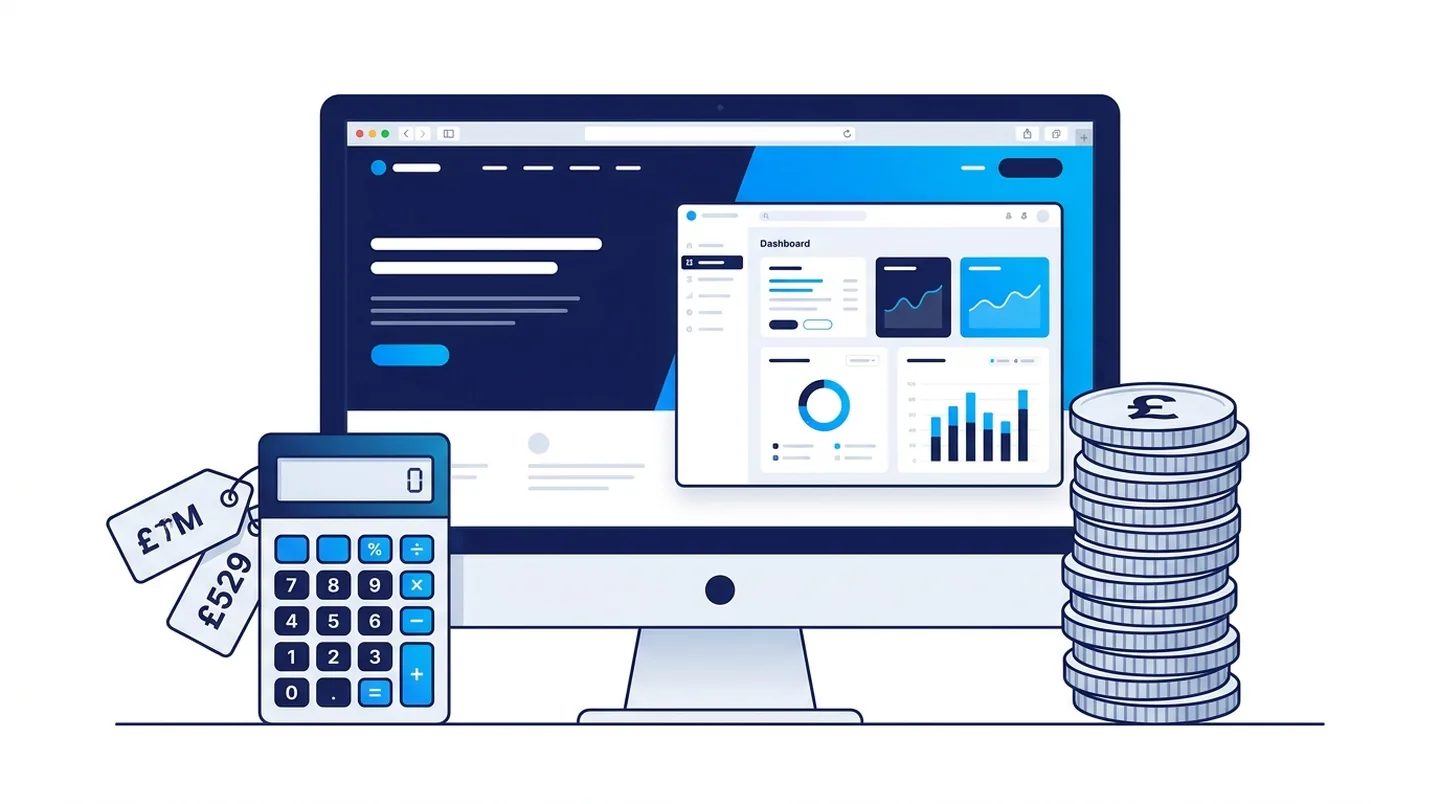
How to budget custom software more safely
Use milestone-based planning, define version-one priorities clearly, and identify what the software must prove or improve first. That usually gives better delivery control.
Pair this with software pricing guidance, web application prioritisation, and our pricing process.
What discovery should produce on paper
Discovery that ends in a conversation and a number has not happened. It should produce artefacts you could hand to a different supplier: the workflows as they run today including the exceptions, a list of the data and where it currently lives, the user roles and what each may see, and the integrations with what each system can actually offer.
Those documents are the real output, and they are worth paying for separately. A business that owns them can get comparable quotes; a business that does not is buying from whoever produced the friendliest estimate.
Map the exceptions, because they are the system
Every business describes its process as a straight line and then runs it with a dozen exceptions: the customer who pays differently, the order that skips a step, the approval that happens by phone. Software built for the straight line gets rejected by the people who have to use it, because it cannot express their Tuesday.
Asking "when does this not happen that way?" at each step is the single most useful question in discovery, and it is where most of the scope that later appears as a change request is actually hiding.
Frequently Asked Questions
What is the main goal of software discovery?
The goal is to reduce uncertainty by clarifying business needs, workflows, scope assumptions, and the safest first delivery path.
Should every custom software project use milestones?
In most cases yes, because milestones give better control over scope, approvals, and delivery expectations.
Next Step
If you want software scope defined properly before build starts, see our software development service and book a discovery call.
Next Step Resources
Move from research into action with the most relevant service, proof, pricing, and project planning pages for this topic.

Tags:
























































Leave a Comment
Ask a practical question, share a project insight, or add a useful note. Every comment is reviewed before it appears publicly.