

Blog post overview and metadata
Author, publish date, read time, and category
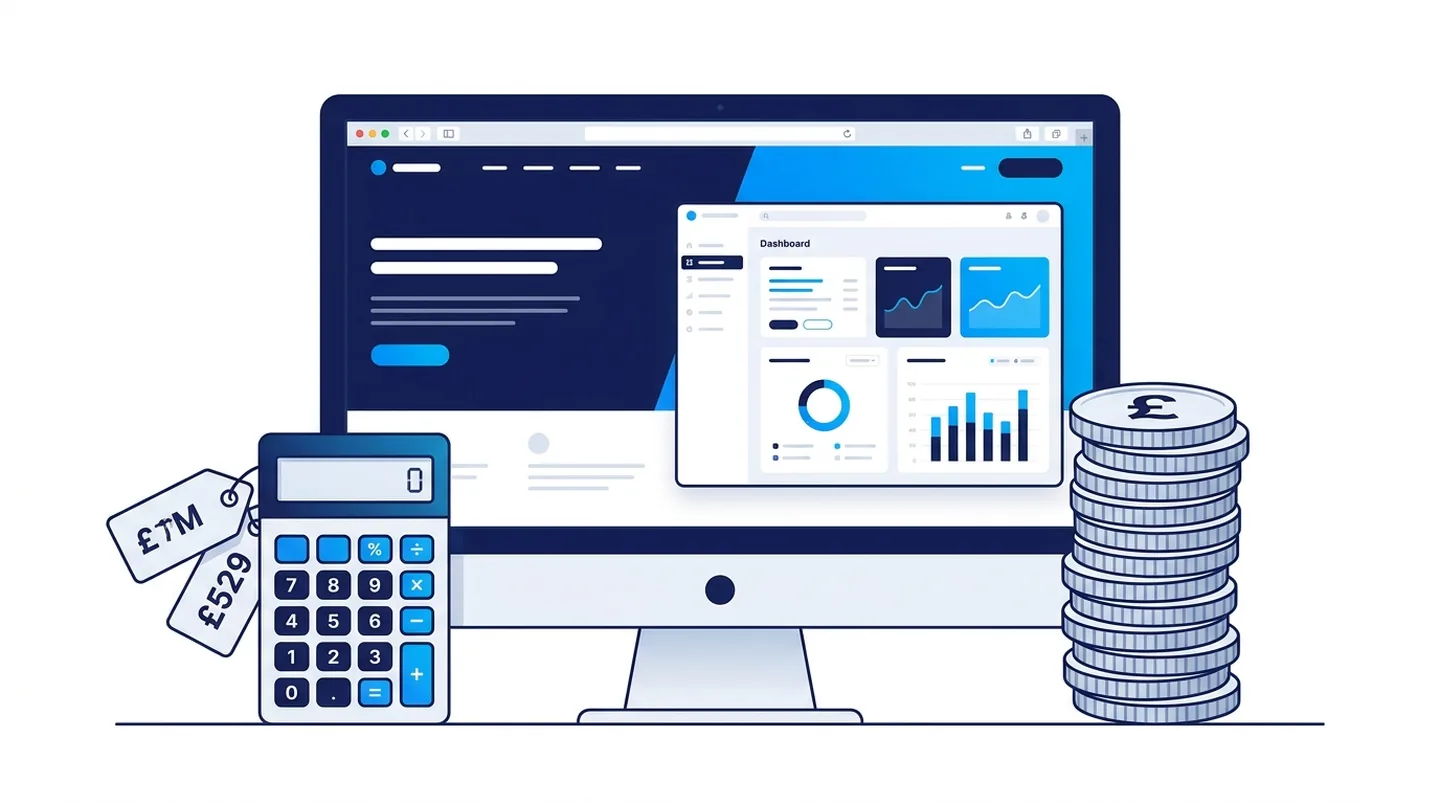
Website Redesign ROI: When UK Service Businesses Should Rebuild (And When Not To)
Reviewed by: ARS Developer | Updated: 31 Jul 2026 | UK Focus: Buyer-intent SEO, web delivery, and measurable conversion growth.
Quick Summary
A website redesign UK service businesses actually need starts with maths, not aesthetics. This anti-hype guide gives you the Rebuild-or-Refine Test, real GBP cost tiers, honest ROI calculations, and the exact situations where a full redesign is the wrong, expensive answer.
In This Guide
- What does a website redesign actually mean?
- The Rebuild-or-Refine Test: 7 questions before you spend
- How much does a website redesign cost in the UK?
- How do you calculate redesign ROI?
- When is a redesign the WRONG answer?
- How long does a website redesign take?
- A 7-step checklist before you commission a redesign
- Frequently asked questions
Why This Article Is Trustworthy
- Reviewed by the ARS Developer editorial team for UK business relevance.
- Structured around buyer-intent SEO, technical delivery, and measurable conversion outcomes.
- Connected to related service pages, pricing guidance, and supporting articles for stronger topic depth.
A website redesign UK service businesses can justify starts with maths, not mood boards. A full rebuild typically costs £4,000–£15,000+, a partial rebuild £2,000–£6,000, and a focused refresh £800–£2,500. You should only rebuild when your current site is measurably losing you enquiries — not because it "feels dated". This guide shows you how to tell the difference.
At ARS Developer, a software development company in Stoke-on-Trent, we get the same call most weeks: "Our website looks old, we think we need a redesign." Sometimes that's right. Often it isn't — and a £10,000 rebuild fixes a problem the business didn't actually have, while ignoring the one it did. This is an anti-hype decision guide. We'll give you a named framework, honest GBP cost tiers, and the ROI sums to run before you sign anything.
What does a website redesign actually mean?
A website redesign means changing how your site looks, works, or is built — but the scope varies enormously, and so does the price. Getting the vocabulary right is the first step to not overspending. Broadly, there are three levels, and most businesses assume they need the most expensive one when they need the cheapest.
Refresh vs partial rebuild vs full redesign
A refresh keeps your existing site and platform, and improves specific things: new hero section, updated copy, better calls-to-action, refreshed images, speed fixes. A partial rebuild restructures key pages and templates — usually the homepage, service pages and enquiry flow — while keeping the underlying platform. A full redesign rebuilds the site from scratch, often on a new platform, with new structure, design system and content.
The "website rebuild vs refresh" question matters because a refresh can lift conversions in a fortnight for under £2,500, while a full redesign takes 6–12 weeks and locks up your budget. Don't buy the Rolls-Royce to fix a flat tyre.
The Rebuild-or-Refine Test: 7 questions before you spend
Across 50+ UK projects we've delivered, the pattern we see most is that businesses redesign for emotional reasons and regret the cost, or refuse to rebuild a site that's actively bleeding money. To remove the guesswork, we use a scoring framework we call The Rebuild-or-Refine Test. Score each question 0, 1 or 2. Add up your total, then read the verdict below.
- Traffic trend. Is your organic traffic flat or falling over the last 12 months despite steady effort? (Falling = 2, flat = 1, growing = 0.)
- Conversion rate. Of the people who land on your site, are fewer than 1.5% enquiring or buying? (Under 1% = 2, 1–2% = 1, over 2% = 0.)
- Speed. Does your site take longer than 3 seconds to load on mobile 4G? (Over 4s = 2, 3–4s = 1, under 3s = 0.)
- Mobile experience. Is your site awkward to use on a phone — tiny tap targets, broken layouts, hard-to-find phone number? (Broken = 2, clunky = 1, clean = 0.)
- Content accuracy. Does the site still describe services, prices or areas you no longer offer — or miss ones you do? (Badly out of date = 2, some gaps = 1, accurate = 0.)
- CMS limits. Can your team actually edit pages, add case studies and publish blog posts without a developer? (Impossible = 2, painful = 1, easy = 0.)
- Brand trust. Would a first-time visitor trust you enough to hand over money — clear proof, reviews, credentials, professional design? (Looks untrustworthy = 2, average = 1, strong = 0.)
Your score:
- 0–4: Refine, don't rebuild. Your foundations are sound. A refresh will give you a better return than a full redesign.
- 5–9: Partial rebuild. Specific parts are dragging you down. Rebuild the pages and systems that score 2; leave the rest.
- 10–14: Full redesign justified. The problems are structural. Patching won't hold, and a ground-up rebuild will likely pay for itself.
The value of the Rebuild-or-Refine Test is that it forces a business decision instead of an aesthetic one. "It looks old" isn't on the list, because looking old rarely costs you money — losing enquiries does.
How much does a website redesign cost in the UK?
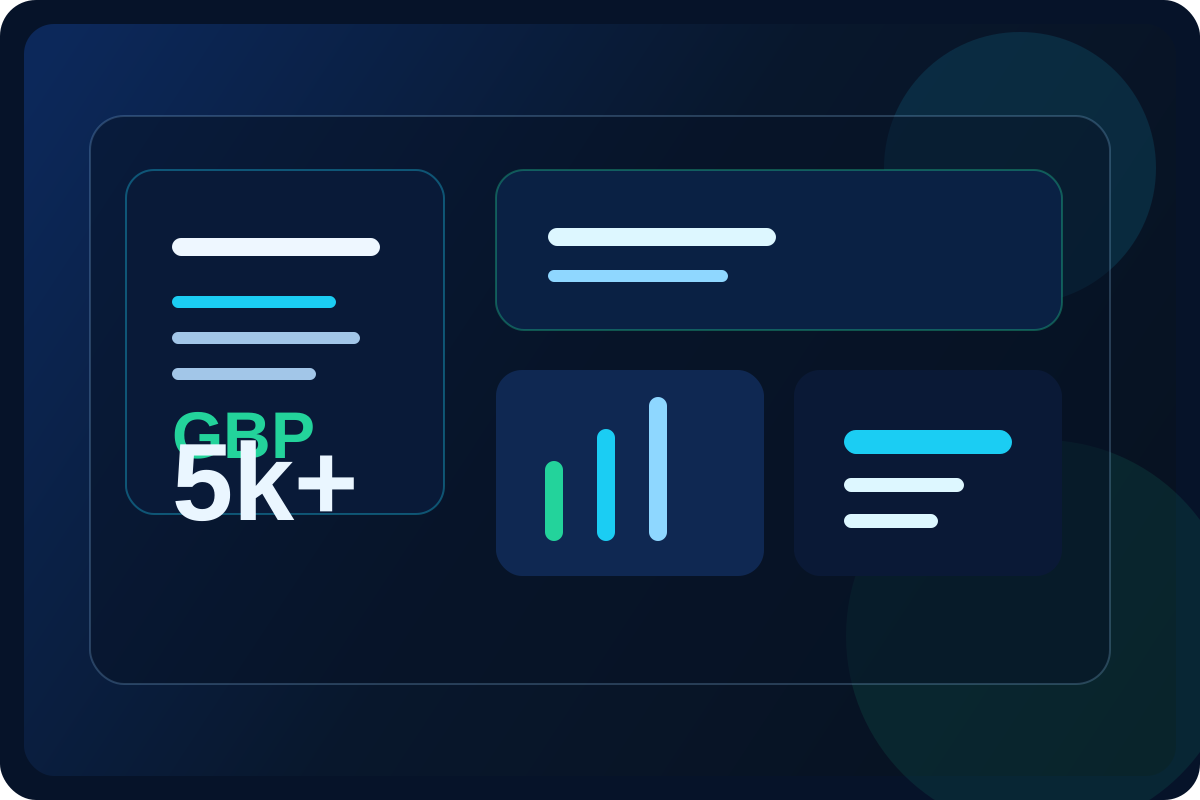
A website redesign cost UK businesses should budget for ranges from around £800 for a light refresh to £15,000+ for a full custom rebuild, depending on scope, number of pages, and whether you need custom functionality. Below are realistic 2026 tiers based on the projects we and comparable UK studios deliver.
| Tier | Typical GBP cost | Timeline | Best when your test score is | What you get |
|---|---|---|---|---|
| Refresh | £800 – £2,500 | 1–3 weeks | 0–4 | New copy, hero, CTAs, images, speed fixes on existing platform |
| Partial rebuild | £2,000 – £6,000 | 3–6 weeks | 5–9 | Rebuilt homepage, service and enquiry pages, improved structure and CMS |
| Full redesign | £4,000 – £15,000+ | 6–12 weeks | 10–14 | New platform, design system, content architecture, integrations, automation |
| Custom web application | £12,000 – £40,000+ | 10–20+ weeks | N/A — different job | Bespoke portals, booking systems, CRM-connected tools |
Beware two pricing traps. First, agencies that quote a low headline then bill "extra" for content, revisions and integrations — always ask what's excluded. Second, the £299 template site that costs you £5,000 in lost enquiries a year because it converts badly. Cheap and expensive are decided at the checkout of results, not the invoice. You can see the range of builds we deliver on our portfolio.
How do you calculate redesign ROI?
Redesign ROI is calculated as the extra annual profit a better site generates, divided by its cost. The core sum is: additional monthly visitors who enquire, multiplied by your close rate, multiplied by your average job value — then compared against the redesign price. If a rebuild pays for itself inside 6–12 months, it's usually worth doing.
The redesign ROI formula, worked through
Let's use a realistic UK example. Say your site gets 2,000 visitors a month and converts at 1% — that's 20 enquiries. You close 40% of enquiries, and your average job is worth £900.
- Now: 20 enquiries × 40% close × £900 = £7,200/month.
- After a redesign that lifts conversion to 2%: 40 enquiries × 40% × £900 = £14,400/month.
- Extra revenue: £7,200/month, or roughly £86,000 a year.
Against a £6,000 partial rebuild, that's a payback period well under a month in gross revenue terms. Even if you halve every assumption to be conservative, the case holds. This is why we tell clients to lead with the conversion-rate number, not the colour palette.
One honest caveat we always give: conversion uplift is a range, not a guarantee. Across the redesigns we've measured, a well-targeted rebuild commonly moves conversion from around 1% to 2–3% — but the businesses that see the top of that range fix their offer and proof, not just the design. Structured, conversion-focused web design and development is where the maths comes from.
When is a redesign the WRONG answer?
This is the section most agencies won't write, because they sell redesigns. But a full redesign is the wrong call more often than you'd think, and spending £10,000 to fix the wrong problem is how businesses lose faith in their website entirely.
Signs you have a different problem
- Your traffic is the problem, not the site. If only 200 people visit a month, a beautiful new site still only has 200 people to convert. You need traffic — search engine optimisation and content — before a rebuild.
- Your offer isn't competitive. If you're 30% more expensive with no clear reason, no design fixes that. The website exposes the offer; it can't rescue it.
- You've never tested a simple change. If you haven't tried a clearer headline, a visible phone number and stronger proof, do that first. It's cheap and it tells you whether design is really the bottleneck.
- You redesigned 18 months ago. Redesign fatigue is real. Iterate on what you have rather than starting again and losing the SEO equity you've built.
- The real issue is lead handling. If enquiries come in but nobody follows up for two days, no redesign fixes your close rate. That's a process and automation problem.
Across 50+ UK projects we've delivered, the single most common thing we do on a "we need a redesign" call is talk the client out of the full rebuild and into a targeted refresh plus better follow-up. It costs them less and earns them more, and it's why they come back.
How long does a website redesign take?
A website redesign takes 1–3 weeks for a refresh, 3–6 weeks for a partial rebuild, and 6–12 weeks for a full custom redesign in the UK. The biggest cause of delay isn't development — it's content. Waiting on your copy, photos and sign-off is what turns a 6-week project into a 4-month one.
To keep a redesign on track, agree milestones up front, nominate one decision-maker on your side, and gather content before build begins. We work to fixed milestones with no payment until each stage is approved — which keeps both sides honest about the timeline.
A 7-step checklist before you commission a redesign
Run through this before you spend a penny. If you can't answer the first three, you're not ready to brief anyone.
- Know your numbers. Current monthly visitors, conversion rate, close rate and average job value. No data, no decision.
- Take the Rebuild-or-Refine Test. Score honestly and let the total pick your tier.
- Do the ROI sum. Extra enquiries × close rate × job value versus the quote. Aim for payback inside 12 months.
- Protect your SEO. Confirm the agency will map old URLs to new ones with 301 redirects so you don't lose rankings.
- Check who owns the site. You should own the domain, hosting and code. Get it in writing.
- Agree milestones and payment stages. Avoid large upfront payments before you've seen work.
- Plan measurement. Decide how you'll track results — conversions, calls, forms — so you can prove the ROI later.
Frequently asked questions
How much does a website redesign cost in the UK?
A website redesign cost UK businesses face ranges from £800–£2,500 for a refresh, £2,000–£6,000 for a partial rebuild, and £4,000–£15,000+ for a full custom redesign in 2026. Price depends on page count, custom functionality and content needs. Bespoke web applications with booking or CRM features start higher, from around £12,000.
How often should a business website be redesigned?
Most UK service businesses benefit from a light refresh every 2–3 years and a fuller redesign every 4–6 years. Rather than following a calendar, redesign when the data says so — falling conversions, poor mobile performance or outdated content. A site that still converts well doesn't need rebuilding just because it feels familiar to you.
Does redesigning a website hurt SEO?
A redesign only hurts SEO if it's done carelessly. Rankings drop when URLs change without 301 redirects, content is stripped out, or page speed worsens. Done properly — mapping every old URL, preserving strong content and improving speed — a redesign usually helps SEO. Always insist your agency includes a redirect and migration plan before launch.
What is the difference between a redesign and a new website?
A redesign improves or rebuilds your existing site, keeping its content, URLs and SEO history where possible. A "new website" often means starting fresh with a new structure and platform. In practice they overlap; the key difference is whether you preserve existing SEO equity. Preserving it is almost always cheaper and safer than starting from zero.
Should I redesign my website or just refresh it?
Use the Rebuild-or-Refine Test. If your foundations are sound and only copy, layout or speed need work, refresh it for under £2,500. If structural problems, an unusable CMS or an untrustworthy design are costing you enquiries, a partial or full rebuild is justified. Score the problem before choosing the solution.
What ROI should I expect from a website redesign?
A well-targeted redesign commonly lifts conversion from around 1% to 2–3%, which for many UK service businesses means the project pays for itself within 6–12 months. The exact return depends on your traffic, close rate and average job value. Run the sum first — if the maths doesn't work on paper, a redesign won't fix it in reality.
The honest verdict
A website redesign is a business investment, not a decorating job. Score your site with the Rebuild-or-Refine Test, run the ROI sum, and match the spend to the actual problem — refresh, partial rebuild or full redesign. And if the honest answer is "you don't need a redesign yet", a good partner will tell you.
ARS Developer, a software development company in Stoke-on-Trent, delivers conversion-focused websites with founder-led delivery, clear milestones and no payment until you approve the work. If you'd like a straight answer on whether to rebuild or refine, book a free 30-minute discovery call with the founder or request a free growth audit — we respond within one business day. You can also read more decision guides on our blog.
Next Step Resources
Move from research into action with the most relevant service, proof, pricing, and project planning pages for this topic.

Tags:










































Leave a Comment
Ask a practical question, share a project insight, or add a useful note. Every comment is reviewed before it appears publicly.