

Blog post overview and metadata
Author, publish date, read time, and category
Custom Software vs Off-the-Shelf: How UK Businesses Decide (A Cost Reality Check)
Reviewed by: ARS Developer | Updated: 29 Jun 2026 | UK Focus: Buyer-intent SEO, web delivery, and measurable conversion growth.
Quick Summary
The debate over custom software vs off the shelf in the UK usually starts with a single number: the price tag on a ready-made tool. That number looks reassuring on day one and far less reassuring three years later, once you have added...
In This Guide
- The Build-vs-Buy Dilemma in Plain English
- When Off-the-Shelf Software Is the Right Call
- When Custom Software Wins
- The True Cost of Off-the-Shelf (It's Bigger Than the Subscription)
- The True Cost of Custom Software (Upfront vs Ownership)
- Side-by-Side: A 3-to-5-Year Cost Comparison
- The Smart Hybrid: Buy the Commodity, Build Your Edge
- Risk Factors to Weigh on Both Sides
Why This Article Is Trustworthy
- Reviewed by the ARS Developer editorial team for UK business relevance.
- Structured around buyer-intent SEO, technical delivery, and measurable conversion outcomes.
- Connected to related service pages, pricing guidance, and supporting articles for stronger topic depth.
The debate over custom software vs off the shelf in the UK usually starts with a single number: the price tag on a ready-made tool. That number looks reassuring on day one and far less reassuring three years later, once you have added seats, bolted on integrations, and worked around every limitation the product never intended to solve. At ARS Developer Ltd, our team in Stoke-on-Trent has guided dozens of UK businesses through this exact decision, and the honest answer is rarely "always build" or "always buy." It depends on what the software is for, how central it is to your competitive edge, and what the real five-year cost looks like once the marketing gloss wears off.
This is a cost reality check, not a sales pitch. We will walk through when off-the-shelf is genuinely the right call, when custom software development in the UK earns its keep, and how to compare the two over a realistic time horizon rather than a single invoice.
The Build-vs-Buy Dilemma in Plain English
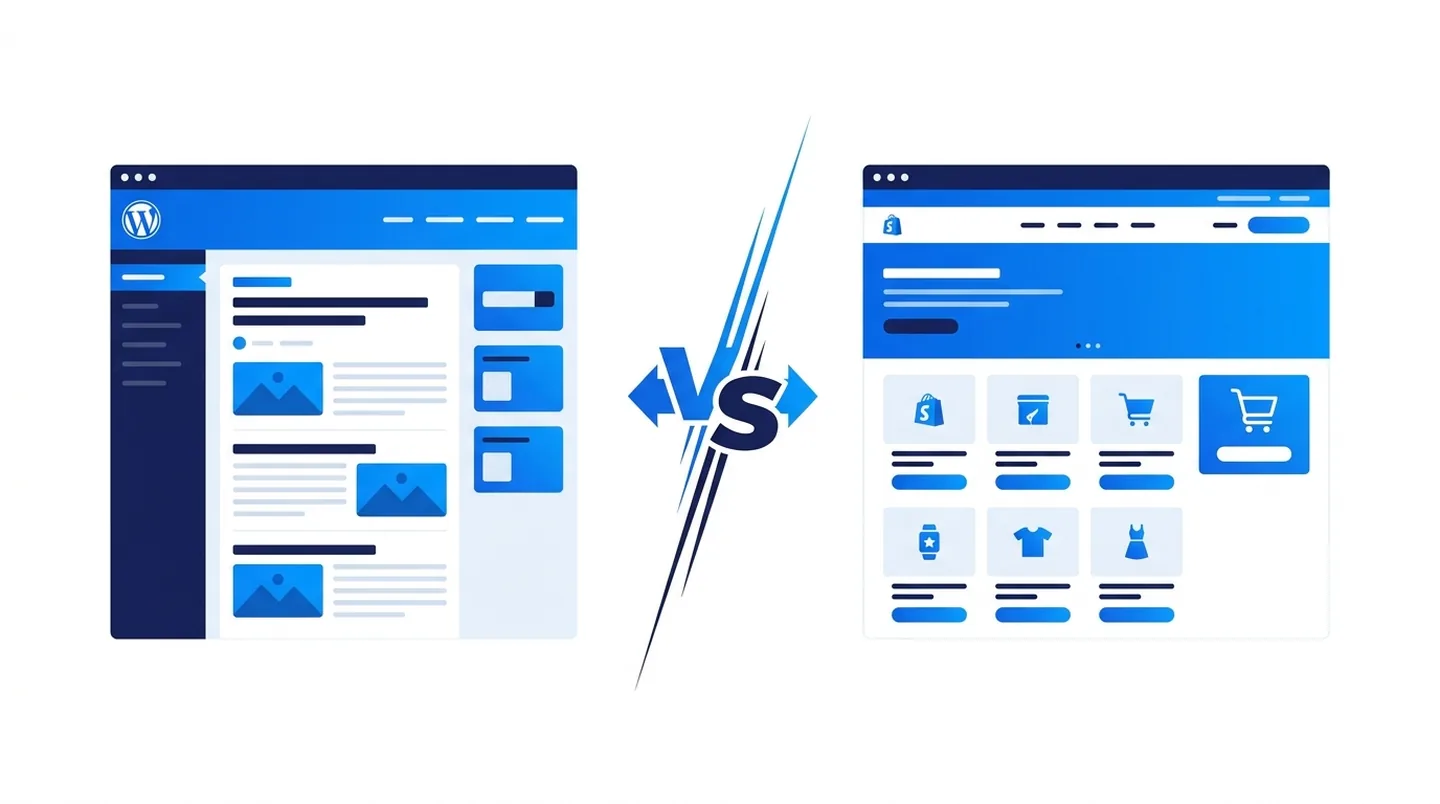
Every growing company hits the same fork in the road. You have a process that needs software: managing customers, processing orders, scheduling jobs, reporting to the board. You can buy an existing product and adapt your business to it, or you can build a bespoke system that adapts to your business. That is the build vs buy software question in a nutshell.
The trap is treating it as a purely financial decision when it is really a strategic one. Off-the-shelf software is cheaper to start and faster to deploy. Custom software costs more upfront but fits exactly and belongs to you. The right choice hinges on a question most vendors never ask: is this process a commodity, or is it part of what makes your business different?
When Off-the-Shelf Software Is the Right Call
We frequently tell clients not to build. Off-the-shelf wins when the problem is well understood, standardised, and not a source of competitive advantage. Email, accounting, payroll, document storage, video calls, and basic CRM for a small team are all solved problems. Paying thousands to rebuild what Xero, QuickBooks, or Microsoft 365 already do well is rarely sensible.
Choose off-the-shelf software when:
- The process is generic and shared by thousands of other businesses.
- You need it running this week, not this quarter.
- Your team is small and the monthly per-seat cost is still modest.
- Regulatory or accounting requirements are standard and well covered.
- The product's roadmap is actively maintained and the company is stable.
In these cases, a ready-made tool gives you maturity, support, and security patches you would otherwise pay a team to produce. Buying is the smart, frugal choice.
When Custom Software Wins
Custom software development in the UK earns its place when the software is the business, or close to it. If your workflow is unusual, if your margins depend on doing something faster or smarter than competitors, or if you are forcing three off-the-shelf products to talk to each other with spreadsheets and copy-paste, you have probably outgrown the buy option.
Bespoke software tends to win when:
- Your process is your differentiator and no product matches it.
- You are paying for features you do not use and still missing the ones you need.
- Manual workarounds and double-entry are eating staff hours every day.
- You need systems that integrate cleanly rather than awkwardly.
- You want to own the asset, the data, and the roadmap.
- You expect to scale, and per-seat licensing would punish that growth.
This is the heart of the custom software vs off the shelf UK question. Off-the-shelf is rented capability. Custom software is owned capability. When the capability is central to how you win, ownership starts to matter.
The True Cost of Off-the-Shelf (It's Bigger Than the Subscription)
The sticker price is the smallest part of the off the shelf software limitations story. The real bill accumulates quietly across several lines that never appear in the original quote.
Subscriptions and per-seat pricing
A tool at £40 per user per month looks trivial for five people. At 50 people that is £24,000 a year, every year, forever, with annual price rises baked in. You are not buying anything; you are renting access, and the meter never stops.
Integration glue
Off-the-shelf products rarely connect to your other systems out of the box. Businesses end up paying for middleware, connectors like Zapier, or developer time to build and maintain brittle integrations. That glue breaks every time a vendor changes its API.
No ownership and lock-in
Your data lives in someone else's system, in their format, under their terms. Migrating away is painful by design. Price hikes, feature removals, and acquisitions are all out of your control.
Outgrowing it
The cruellest cost is success. The tool that fit at 10 staff strains at 100. You hit user caps, performance ceilings, and reporting limits, then spend on the next tier, then eventually pay to migrate anyway. Many clients who ask us about bespoke software cost in the UK arrive precisely because they have already spent years and a small fortune outgrowing a product they once thought was cheap.
The True Cost of Custom Software (Upfront vs Ownership)
Custom software is honest about its upfront cost and quiet about its long-term value. You pay more at the start to design, build, test, and deploy something that did not exist before. But what you receive is an asset, not a rental.
The custom cost breaks down into:
- Upfront build: discovery, design, development, and testing. This is the figure that scares people.
- Ongoing maintenance: typically a fraction of the build cost per year for hosting, updates, and support, with no per-seat tax.
- Fit: zero wasted spend on features you do not use and zero workaround labour.
- Scale: adding the 500th user costs roughly the same as the 5th, because you are not paying a licence per head.
- Ownership: you control the data, the code, and the roadmap. The asset can even appear on your balance sheet.
For perspective on how build economics shift across markets, our partner site breaks down what a custom web app costs in Dubai, which is a useful comparison point for UK firms benchmarking bespoke software cost internationally.
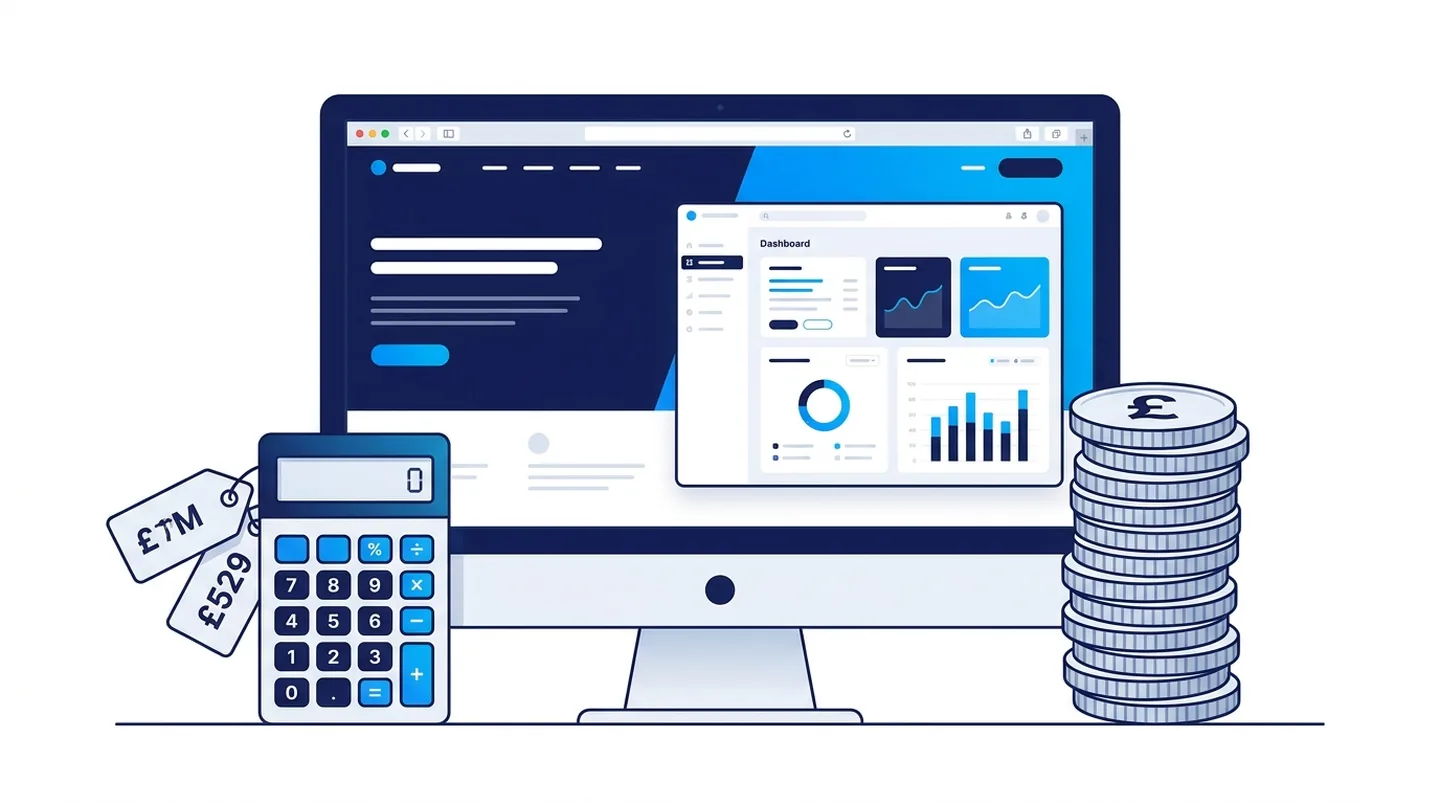
Side-by-Side: A 3-to-5-Year Cost Comparison
Numbers vary by project, but the shape of the comparison is remarkably consistent. Here is an illustrative picture for a mid-sized UK business automating a core operational process used by around 40 staff.
Off-the-shelf (rented):
- Year 1: low setup, plus subscription (around £19,000) and integration build.
- Years 2 to 5: subscription compounds with seats and price rises; integration maintenance continues.
- Five-year total: high and rising, with nothing owned at the end.
- Hidden line: staff hours lost to workarounds and the eventual migration cost.
Custom software (owned):
- Year 1: high upfront build (the bulk of total spend lands here).
- Years 2 to 5: modest, predictable maintenance with no per-seat charge.
- Five-year total: often level with or below off-the-shelf, and flatter year on year.
- Hidden value: you own an appreciating asset that fits perfectly and scales freely.
The crossover point is the whole game. Off-the-shelf is cheaper until roughly years two to four, depending on headcount and growth. After the crossover, custom software is usually cheaper and better fitting. The faster you grow, the sooner the lines cross. This is why the custom software vs off the shelf UK decision should always be modelled over years, never over a single invoice.
The Smart Hybrid: Buy the Commodity, Build Your Edge
The most cost-effective answer is rarely all-or-nothing. The savviest UK businesses we work with run a hybrid model: buy commodity software for the parts that do not differentiate them, and build custom software for the parts that do.
In practice that means keeping Xero for accounts, Microsoft 365 for email and documents, and a mature payroll provider, while building a bespoke system for the operational core that makes the business special: the unusual quoting engine, the proprietary scheduling logic, the customer portal no competitor offers. You spend custom budget only where it generates a return, and you let proven products handle the rest. Modern frameworks such as Laravel make this straightforward, because a custom build can integrate cleanly with the commodity tools you keep rather than replacing everything.
Risk Factors to Weigh on Both Sides
Neither path is risk-free, and pretending otherwise is how projects go wrong.
Off-the-shelf risks:
- Vendor lock-in and unpredictable price increases.
- Discontinued products or acquisitions that change the deal.
- Features you depend on being removed or paywalled.
- Compliance gaps where your needs sit outside the standard product.
Custom software risks:
- Higher upfront cost and a longer time to first value.
- Dependence on the quality of your build partner.
- Scope creep if requirements are not disciplined.
- Maintenance responsibility sitting with you (mitigated by a support agreement).
Most custom-software risk is partner risk, which is why choosing a software development agency with a transparent process matters as much as the technology itself.
How ARS Runs a Discovery to Recommend Honestly
Before we quote a single line of code, our team runs a structured discovery. The goal is not to sell a build; it is to find the cheapest path to the right outcome. Sometimes that path is off-the-shelf, and we will tell you so.
A discovery with ARS covers:
- Process mapping: what you actually do, where the friction is, and what it costs you today.
- Market scan: whether a mature product already solves this well enough.
- Differentiator test: is this process a commodity or a competitive edge?
- Five-year cost model: a like-for-like comparison of buy vs build, including hidden costs.
- Honest recommendation: buy, build, or hybrid, with the reasoning written down.
We have walked clients away from six-figure builds because a £15,000-a-year subscription genuinely did the job. We have also saved clients from renting their way into a problem that only ownership could fix. An honest discovery is the single best protection against wasting money on either side of the custom software vs off the shelf UK divide.
Key Takeaways
- Buy commodity capability; build the parts that make your business different.
- Off-the-shelf is rented; custom software is owned. Ownership compounds in value.
- The real cost of off-the-shelf is subscriptions, per-seat pricing, integration glue, lock-in, and outgrowing it.
- Custom software costs more upfront but flattens over time and scales without per-seat penalties.
- Model the decision over three to five years, not one invoice. The crossover point decides it.
- Most custom-software risk is partner risk, so choose your agency carefully.
- A good discovery should be willing to recommend not building.
Frequently Asked Questions
Is custom software more expensive than off-the-shelf?
Upfront, yes, almost always. Over three to five years, often no. Off-the-shelf subscriptions and per-seat pricing compound every year, while custom software has a high initial cost followed by modest, predictable maintenance. For growing teams, the total cost of ownership frequently favours custom once you cross the two-to-four-year mark.
When should a UK business build custom software?
Build when the process is a competitive differentiator, when you have outgrown or are fighting against existing products, when you need clean integration across systems, or when per-seat licensing is punishing your growth. If the process is generic and well served by a mature product, buy instead.
How long does custom software take to build?
A focused first version typically takes a few months from discovery to launch, depending on complexity. We favour delivering a usable core early and expanding it in stages, so you get value before the full system is complete rather than waiting a year for a big-bang release.
What are the main off the shelf software limitations?
You adapt your business to the product rather than the reverse, you pay for features you never use, you rarely own your data, integrations are brittle, and you hit user, performance, or reporting ceilings as you grow. These limitations are why many firms eventually migrate to bespoke systems.
How much does bespoke software cost in the UK?
It depends entirely on scope, but the honest answer is that the right comparison is the five-year cost of building versus renting, not the upfront figure alone. Our discovery process produces a like-for-like model so you can see the true bespoke software cost in the UK against the off-the-shelf alternative before committing.
Make the Decision With Numbers, Not Guesswork
The build vs buy software choice should never come down to whichever option felt cheaper this morning. It should come down to a clear five-year picture, an honest read on whether the process is a commodity or your edge, and a partner willing to tell you the truth either way. That is exactly what our team in Stoke-on-Trent delivers.
If you are weighing custom software development in the UK against a ready-made product, book a free discovery call with ARS Developer Ltd. We will map your process, model the real costs, and give you a straight recommendation, even if that recommendation is to keep what you already have.
Next Step Resources
Move from research into action with the most relevant service, proof, pricing, and project planning pages for this topic.

Tags:





























Leave a Comment
Ask a practical question, share a project insight, or add a useful note. Every comment is reviewed before it appears publicly.