

Blog post overview and metadata
Author, publish date, read time, and category
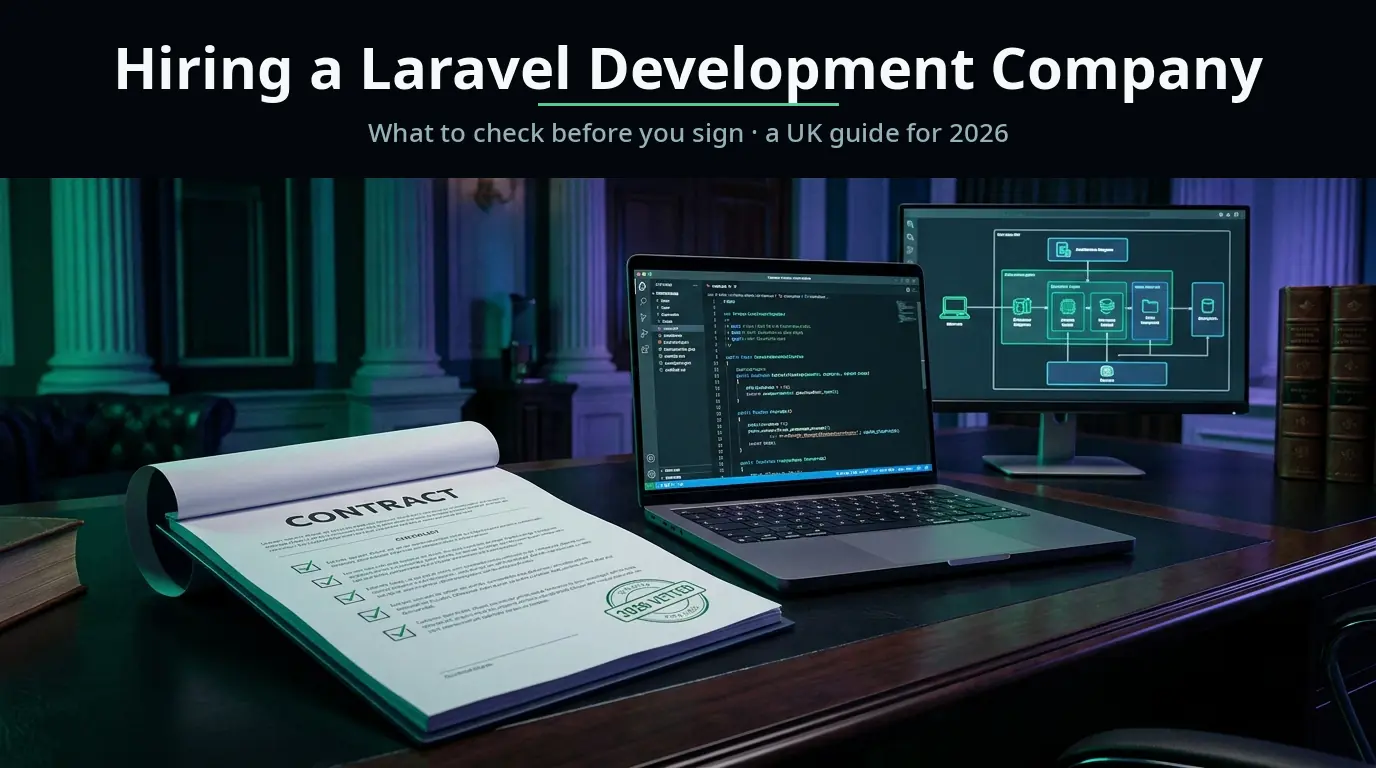
How to Choose a Software Development Agency in the UK: 12 Questions Before You Sign
Reviewed by: ARS Developer | Updated: 31 Jul 2026 | UK Focus: Buyer-intent SEO, web delivery, and measurable conversion growth.
Quick Summary
Knowing how to choose a software development agency UK buyers can actually trust is harder than it should be. Most agency websites read the same: "trusted partner", "cutting-edge", "bespoke solutions". None of that tells you whether the...
In This Guide
- Why vetting matters more than the pitch
- 1. Can we see real projects and the actual code?
- 2. Is there a staging environment, or do you test in production?
- 3. Who owns the code and the data?
- 4. How do you handle security and backups?
- 5. How is performance built in from the start?
- 6. What does support look like, and what does it cost?
- 7. Is the pricing itemised, or one big number?
Why This Article Is Trustworthy
- Reviewed by the ARS Developer editorial team for UK business relevance.
- Structured around buyer-intent SEO, technical delivery, and measurable conversion outcomes.
- Connected to related service pages, pricing guidance, and supporting articles for stronger topic depth.
Knowing how to choose a software development agency UK buyers can actually trust is harder than it should be. Most agency websites read the same: "trusted partner", "cutting-edge", "bespoke solutions". None of that tells you whether the team can ship reliable software, hand it over cleanly, or still be reachable when something breaks at 9pm on a Friday. We are ARS Developer Ltd, a software house based in Stoke-on-Trent, and we have rebuilt enough projects abandoned by other suppliers to know exactly where things go wrong. This guide gives you the 12 questions we would ask before signing a contract with any software development company in the UK — including our own.
Use these questions in your discovery calls. A good agency will welcome them and answer plainly; a weak one will get vague, defensive, or start talking about "trade secrets". That reaction alone is worth the price of admission, and it is the fastest way to learn how to choose a software development agency UK businesses can actually rely on.
Why vetting matters more than the pitch
Software is a long-term commitment. The code you commission today may run your business for years, and the agency that writes it holds real power over your operations. Choosing badly can lock you in, leave you with code nobody can maintain, or quietly bleed money through hidden support fees. Learning how to choose a software development agency UK firms can depend on starts with proper software agency vetting, which is the cheapest insurance you will ever buy. The 12 questions below surface the things that pitches conveniently leave out.
1. Can we see real projects and the actual code?
Anyone can show a polished case study. Far fewer can show you a live, working application and walk you through the codebase behind it. Ask to see real projects in production and, ideally, a sample of the code or a repository structure. This matters because design mockups prove nothing about engineering quality — slow queries, copy-pasted logic, and missing tests are invisible from the front end. A good answer is a confident "yes, here's a live site and here's how the code is organised", possibly with light redaction for client confidentiality. A bad answer is endless excuses about NDAs covering every single client.
2. Is there a staging environment, or do you test in production?
A staging environment is a near-identical copy of your live system where changes are tested before they reach real users. Ask directly: "Where do you test changes before they go live?" This matters because agencies that edit production directly will eventually take your site down with a bad deploy — it is a question of when, not if. A good answer describes separate staging and production environments, a deployment process, and the ability to roll back. If the honest answer is "we just push to the live server", treat it as a serious warning sign about their engineering maturity.
3. Who owns the code and the data?
Ownership should be unambiguous and written into the contract. Ask who owns the source code, the database, and any intellectual property created during the project. This matters enormously: some agencies retain ownership and effectively rent the software back to you, meaning you can never leave without losing everything. A good answer is "you own all of it on full payment, and we hand over the repository and credentials". Anything that keeps the code, domains, or accounts under the agency's name should be challenged before you sign. This is one of the most common traps when you weigh custom software vs off-the-shelf options, because bespoke builds are exactly where ownership terms get murky.
4. How do you handle security and backups?
Security and backups are non-negotiable, yet they are the first corners cut by cheap suppliers. Ask how they protect against common vulnerabilities, how they store credentials and secrets, and how often backups run and where they are stored. This matters because a single SQL injection or a missing backup can end a small business. A good answer covers input validation, secure secret management (never hardcoded passwords), HTTPS everywhere, and automated off-site backups with a tested restore process. "We'll sort that out later" is not an acceptable answer for anything touching customer data.
What good security hygiene looks like
- Secrets kept out of the codebase, loaded from environment configuration.
- Dependencies kept patched, with a process for security updates.
- Automated, off-site backups that are actually tested by restoring them.
- Access controls so not every developer has the keys to production.
5. How is performance built in from the start?
Performance is cheap to design in and expensive to retrofit. Ask how they keep applications fast as data and traffic grow — database indexing, caching, query optimisation, and front-end load times. This matters because a site that feels quick with ten records can crawl with ten thousand, and by then the architecture is fixed. A good answer talks about measuring performance, sensible database design, and Core Web Vitals for anything public-facing. A vague "it'll be fast, don't worry" suggests they have never had to fix a slow system under pressure.
6. What does support look like, and what does it cost?
The build is a fraction of a system's life; support is the rest of it. Ask what happens after launch: response times, who picks up urgent issues, and exactly how support is billed. This matters because many agencies quote a low build price and recover their margin through expensive, vaguely-defined retainers. A good answer is a clear support model — a defined monthly allocation, an hourly rate for ad-hoc work, and a stated response time for outages. Make sure you understand whether you are buying a maintenance contract or paying per incident.
7. Is the pricing itemised, or one big number?
A single lump-sum quote hides where your money goes. Ask for an itemised breakdown: design, development, testing, project management, third-party services, and ongoing costs. This matters because itemised pricing lets you compare suppliers fairly and spot padding or missing essentials (like testing or accessibility). A good answer is a clear quote with line items and assumptions stated. A round number with no breakdown makes it impossible to know whether testing and security were even included — they often are not, and you discover this only when they are billed as "extras" later.
8. Who actually does the work — in-house or outsourced?
You are buying a team, so know who that team is. Ask whether the people in the pitch will write your code, or whether the work is quietly outsourced to a third party you never meet. This matters for quality, accountability, and communication: outsourced chains add time-zone gaps, language friction, and a layer where responsibility gets lost. A good answer is honest about the structure — many reputable firms use trusted partners, and that is fine if it is disclosed. The problem is undisclosed outsourcing, where you think you hired a UK team and your project sits with subcontractors you cannot reach. The same disclosure principle applies whether you are commissioning a full agency build or hiring a freelance web developer in Dubai for a smaller piece of work.
9. How will you communicate and report progress?
Silence is the most common complaint we hear about previous suppliers. Ask how often you will get updates, through what channel, and what a typical progress report contains. This matters because software projects drift, and without regular visibility you only discover problems when the deadline arrives. A good answer is a defined rhythm — weekly updates, a shared board or demo environment, and a named point of contact. A team that cannot describe its own reporting process probably does not have one, and you will spend the project chasing answers.
10. How do exit and portability work?
Plan your exit before you commit. Ask what happens if you decide to leave: do you get the full codebase, the database export, deployment instructions, and all account access? This matters because portability is what keeps an agency honest — if leaving is painful, they have little incentive to keep delivering value. A good answer is a clear offboarding process and software built on standard, well-documented technology rather than a proprietary platform only they understand. If the honest answer is "you'd basically have to rebuild from scratch", you are not buying software, you are renting a hostage.
11. Can you give references in our sector?
Generic references are weaker than sector-specific ones. Ask for clients in your industry, and actually call them. This matters because domain knowledge saves you from explaining the basics of your business and from the agency learning on your budget. A good answer is two or three contactable references who will speak candidly about timelines, communication, and what went wrong (because something always does). When you are deciding on the best software development agency UK shortlist, a single honest reference call is worth more than a dozen testimonials on a website.
12. What do you recommend we DON'T build?
This is the question that separates consultants from order-takers. Ask what they would advise you not to build, or to defer, or to solve with an existing tool instead. This matters because an agency paid by the hour has every incentive to build more; one that tells you to spend less is one you can trust. A good answer might be "you don't need a custom CRM, use an off-the-shelf one and we'll integrate it" — advice that costs them revenue and earns your trust. If every idea you float is met with enthusiastic "yes, we can build that", you have found a supplier optimising for invoice size, not your outcome.
The single best question to ask
If you only ask one thing, ask this: "How hard would it be to move this project to another team next year?" Everything that matters is contained in the answer. Clean, documented code on standard technology, with you owning the repository and accounts, makes the move easy — and an agency confident enough to say so competes on quality rather than lock-in. A defensive answer tells you they are relying on you being unable to leave. The easier they make it to walk away, the less you will ever want to.
Red flags to watch for
Across hundreds of conversations, the same warning signs recur. Any one of these is a reason to slow down; two or more is a reason to walk.
- No staging environment — changes go straight to live.
- Reluctance to put code and data ownership in writing.
- A single lump-sum price with no itemised breakdown.
- Vague or open-ended support costs after launch.
- Undisclosed outsourcing of the actual development work.
- "Trade secrets" used as an excuse to avoid showing real work.
- Proprietary platforms that make leaving expensive or impossible.
- Enthusiastic agreement to build everything you suggest, with no pushback.
- No clear answer on backups, security, or what happens in an outage.
Key takeaways
- Vet on engineering reality — staging, security, backups, performance — not on the pitch deck.
- Get code and data ownership in writing before you sign anything.
- Insist on itemised pricing and a clear, costed support model.
- Find out who actually does the work, and demand honesty about outsourcing.
- Judge an agency by how easily you could leave it, not how much it promises.
- The best supplier sometimes tells you to build less — that is a feature, not a flaw.
Frequently asked questions
How much does a software development agency cost in the UK?
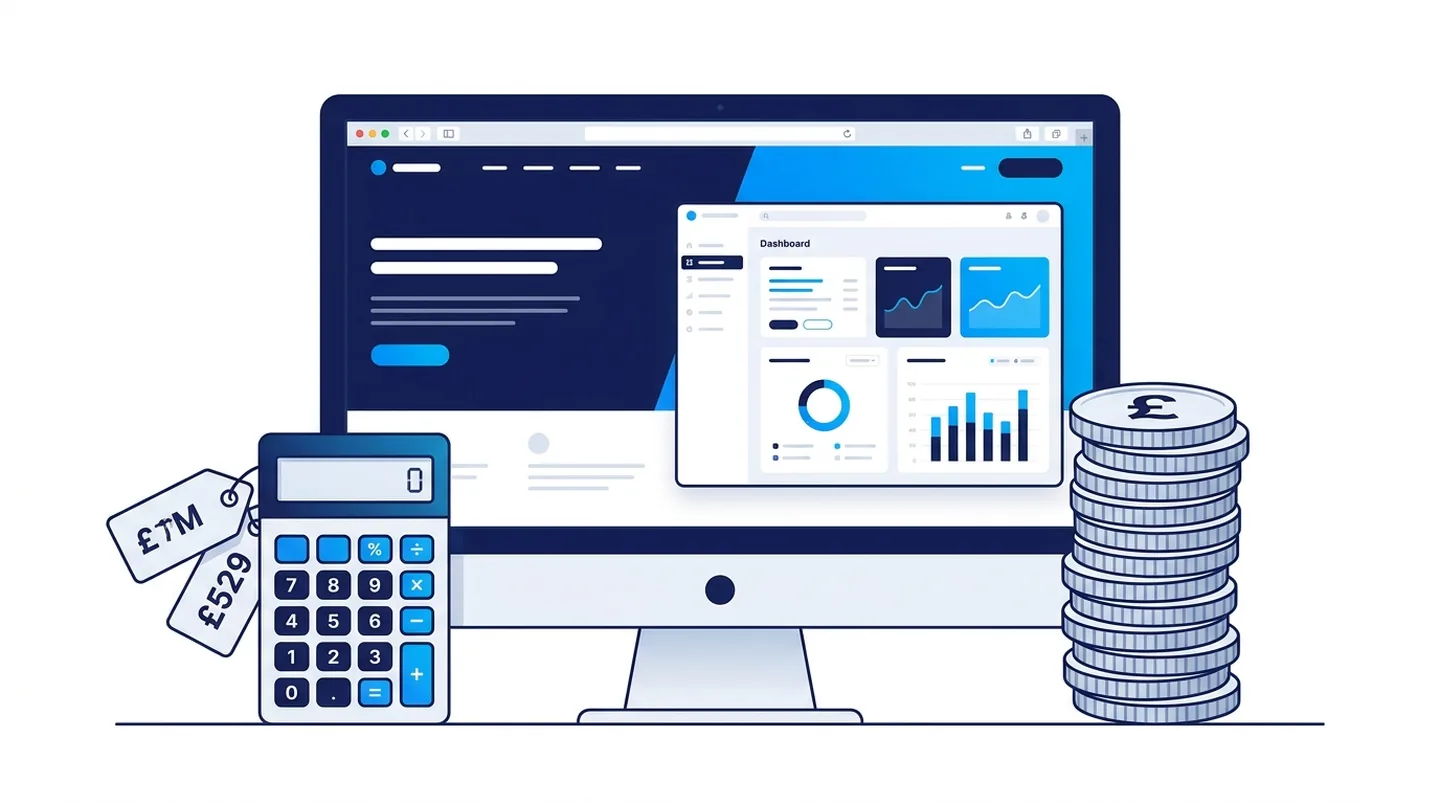
UK day rates vary widely, typically from around £350 to £1,200 per developer day depending on seniority, location, and specialism. A small business application might run from a few thousand pounds, while a complex platform reaches six figures. The headline rate matters less than what is included — cheaper quotes often omit testing, security, and proper handover, so always compare itemised pricing rather than top-line numbers.
Freelancer vs agency — which is better?
A skilled freelancer is excellent value for focused, well-defined work and direct communication. An agency brings a team, redundancy if someone is unavailable, and a wider skill set across design, development, and testing. For a single feature or a tight budget, a freelancer often wins; for a business-critical system you need supported for years, an agency's continuity usually justifies the cost. Many businesses use both, depending on the job.
How do I vet a software company?
Ask to see live projects and code, confirm ownership terms in writing, check for a staging environment and tested backups, get itemised pricing, and call sector references. The single most revealing test is asking how hard it would be to move the project to another team — easy portability signals an honest, confident supplier.
Should I hire Laravel developers in the UK or offshore?
When you hire Laravel developers UK businesses benefit from the same time zone, easier contracts, and clearer accountability, which matters most for ongoing, business-critical work. Offshore teams can be more cost-effective for well-specified projects with strong management. The deciding factor is communication and oversight: a well-managed offshore team can outperform a poorly-run local one, but the risk profile is higher.
What questions reveal a bad software agency fastest?
Two questions do most of the work: "Where do you test changes before they go live?" and "How hard would it be to move this project to another team next year?" Evasive answers to either expose weak engineering practices or a lock-in business model — the two problems that cause the most regret after signing.
Conclusion
Choosing a software development company in the UK is less about finding the slickest pitch and more about asking unglamorous questions until you reach honest answers. The 12 questions above cut through marketing to the things that actually determine whether your project succeeds: ownership, security, support, transparency, and how easily you could walk away. An agency worth hiring will answer all of them without flinching. Knowing how to choose a software development agency UK firms can rely on really does come down to that simple test of confidence and honesty.
At ARS Developer Ltd we build software you own, on standard technology, with the kind of handover that means you are never trapped. If you would like a straight, jargon-free assessment of your project — including an honest view of what you should and should not build — book a free project review with our team and put these questions to us directly.
Next Step Resources
Move from research into action with the most relevant service, proof, pricing, and project planning pages for this topic.

Tags:










































Leave a Comment
Ask a practical question, share a project insight, or add a useful note. Every comment is reviewed before it appears publicly.