
Blog post overview and metadata
Author, publish date, read time, and category
AI Receptionists for UK Service Businesses: Where Automation Helps and Where Humans Must Stay
Reviewed by: ARS Developer | Updated: 08 Sep 2026 | UK Focus: Buyer-intent SEO, web delivery, and measurable conversion growth.
Quick Summary
AI receptionists can help UK service businesses capture missed calls, qualify leads and update CRM records, but the best systems keep humans close for judgement, complaints, pricing and trust-sensitive conversations.
In This Guide
Why This Article Is Trustworthy
- Reviewed by the ARS Developer editorial team for UK business relevance.
- Structured around buyer-intent SEO, technical delivery, and measurable conversion outcomes.
- Connected to related service pages, pricing guidance, and supporting articles for stronger topic depth.
AI receptionists are becoming attractive to UK service businesses because missed calls are expensive. A roofing enquiry, legal consultation, clinic booking or B2B sales lead can disappear in minutes if nobody responds. The opportunity is real, but the best systems do not pretend a machine can replace human judgement. They capture, triage, summarise and route work so people respond faster.
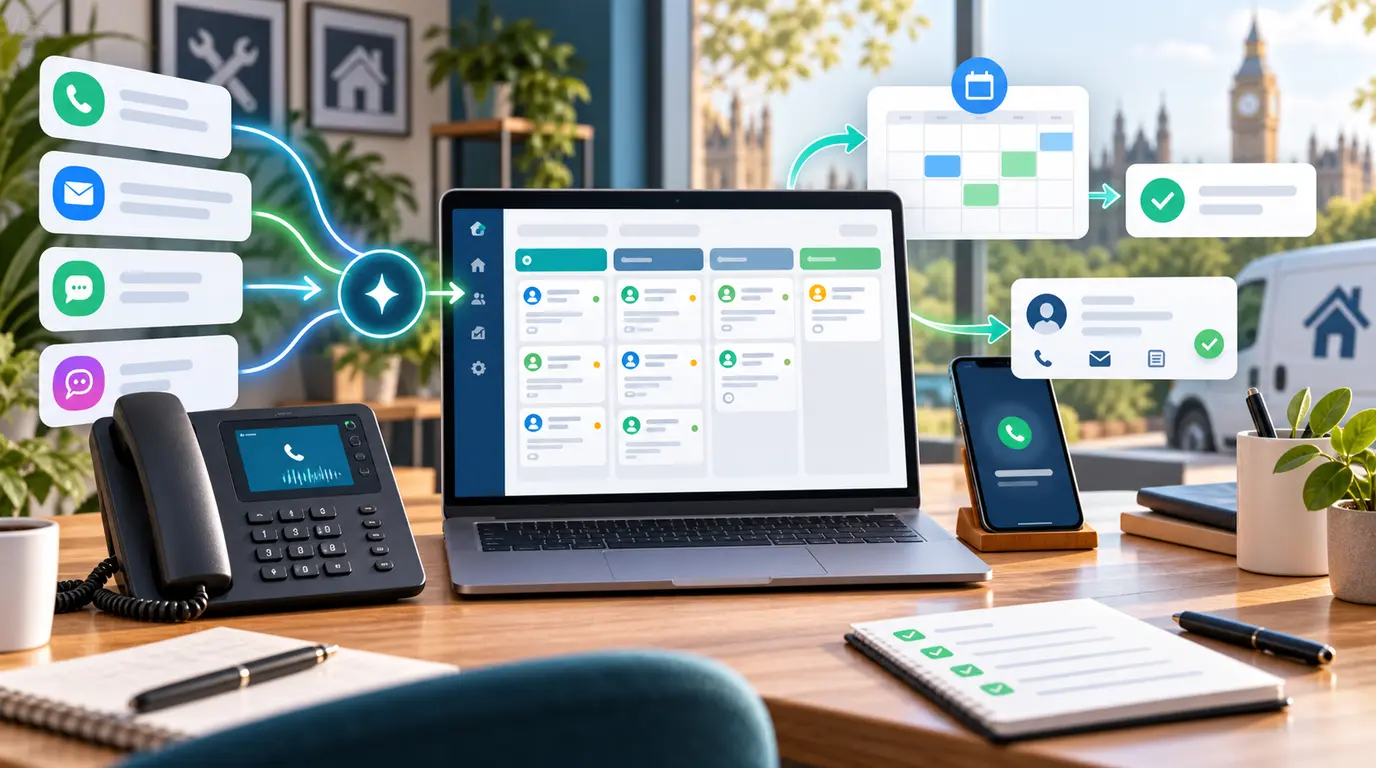
For SMEs, the winning use case is not a theatrical voice bot. It is a dependable front desk layer across phone, website chat and email that collects the right details, checks availability, updates the CRM and alerts a real person when the conversation needs care.
Where automation helps most
AI reception works best on repeatable first-contact tasks. It can ask what service the customer needs, collect postcode and contact details, detect urgency, check whether the enquiry fits your area, summarise the conversation, create a CRM lead and trigger a callback. It can also answer simple questions about opening hours, consultation steps, documents needed or next available appointments.
This is valuable because response speed shapes conversion. A business that calls back within five minutes often beats a cheaper competitor that replies tomorrow. AI does not need to close the sale. It needs to stop good enquiries from leaking out of the funnel.
Where humans must stay
Keep humans involved for pricing promises, complaints, vulnerable customers, legal or medical judgement, unusual edge cases, cancellations with consequences and any conversation where tone matters more than speed. A well-designed system should recognise these moments and escalate quickly with a clean summary.
The wrong design hides uncertainty. The right design admits it. If the assistant is not sure whether the customer is eligible, it should say a team member will confirm. Trust grows when automation is honest about its limits.
The CRM connection is the real prize
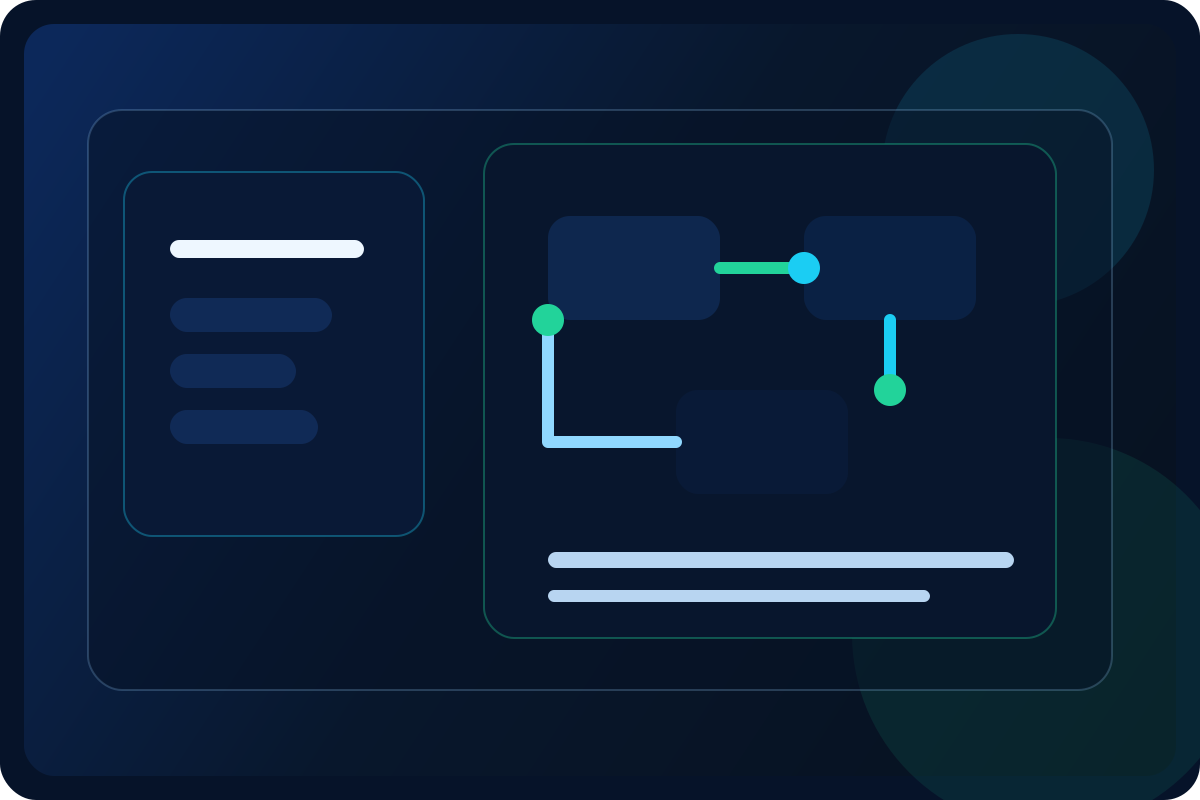
An AI receptionist without CRM integration is just a smarter answering machine. The business benefit arrives when every call creates a structured record: source, service type, urgency, value estimate, location, notes, consent, next action and owner. That lets the team prioritise high-intent leads and track which channels actually produce revenue.
ARS Developer builds these workflows inside custom CRMs and portals for UK SMEs. A web form, call summary and email enquiry can all land in one pipeline instead of three inboxes. See our custom CRM and automation services if your current lead process is scattered.
Privacy and consent
Call handling involves personal data, so the system needs clear consent wording, retention rules and access controls. Do not record or transcribe more than you need. Do not let every staff member read every sensitive conversation. If leads include health, legal, financial or employment details, design the workflow more carefully.
Customers should also know when they are interacting with automation. Trying to disguise AI as a human receptionist may create short-term novelty, but it harms trust when discovered. Plain language is better: the assistant can take details and arrange a callback.
Lead quality scoring
Useful AI receptionists score leads based on fit, urgency and completeness. A same-day emergency in your service area should alert someone immediately. A vague enquiry outside your region can receive a polite response and lower priority. A repeat customer can be routed differently from a cold lead.
The score should remain explainable. If a lead is marked urgent, the team should see why. If a lead is rejected, the reason should be recorded. Explainability keeps automation from becoming a mysterious gatekeeper.
Implementation plan
Start with one channel, usually missed calls or website enquiries. Map the ten questions your best receptionist asks. Decide which answers are required before a lead reaches the team. Connect the result to your CRM. Test with real scenarios, including angry customers, unclear requests and high-value leads. Review transcripts weekly for the first month and refine prompts, fields and escalation rules.
Avoid launching everywhere at once. A focused missed-call workflow that saves five good enquiries a week is more valuable than a sprawling assistant nobody trusts.
Metrics that matter
Track missed calls recovered, average callback time, booked consultations, invalid leads filtered, customer complaints, CRM completeness and revenue by source. Do not judge the system by conversation volume alone. A receptionist that politely filters poor-fit enquiries may reduce volume while increasing profit.
How ARS Developer can help
We can design an AI receptionist workflow around your actual sales process, connect it to your CRM, and keep human escalation visible. For UK service businesses that depend on fast enquiry handling, this can be one of the highest-return automation projects. Share your enquiry flow and we will show where automation belongs.
Next Step Resources
Move from research into action with the most relevant service, proof, pricing, and project planning pages for this topic.

Tags:
































Leave a Comment
Ask a practical question, share a project insight, or add a useful note. Every comment is reviewed before it appears publicly.