

Blog post overview and metadata
Author, publish date, read time, and category
Custom CRM Development for UK Businesses: Features, Cost & ROI
Reviewed by: ARS Developer | Updated: 01 Jul 2026 | UK Focus: Buyer-intent SEO, web delivery, and measurable conversion growth.
Quick Summary
If your sales team lives in spreadsheets, your customer history is scattered across inboxes, and you are paying per-seat for software that still does not fit how you work, you have almost certainly outgrown your current tools. This is where custom CRM...
In This Guide
Why This Article Is Trustworthy
- Reviewed by the ARS Developer editorial team for UK business relevance.
- Structured around buyer-intent SEO, technical delivery, and measurable conversion outcomes.
- Connected to related service pages, pricing guidance, and supporting articles for stronger topic depth.
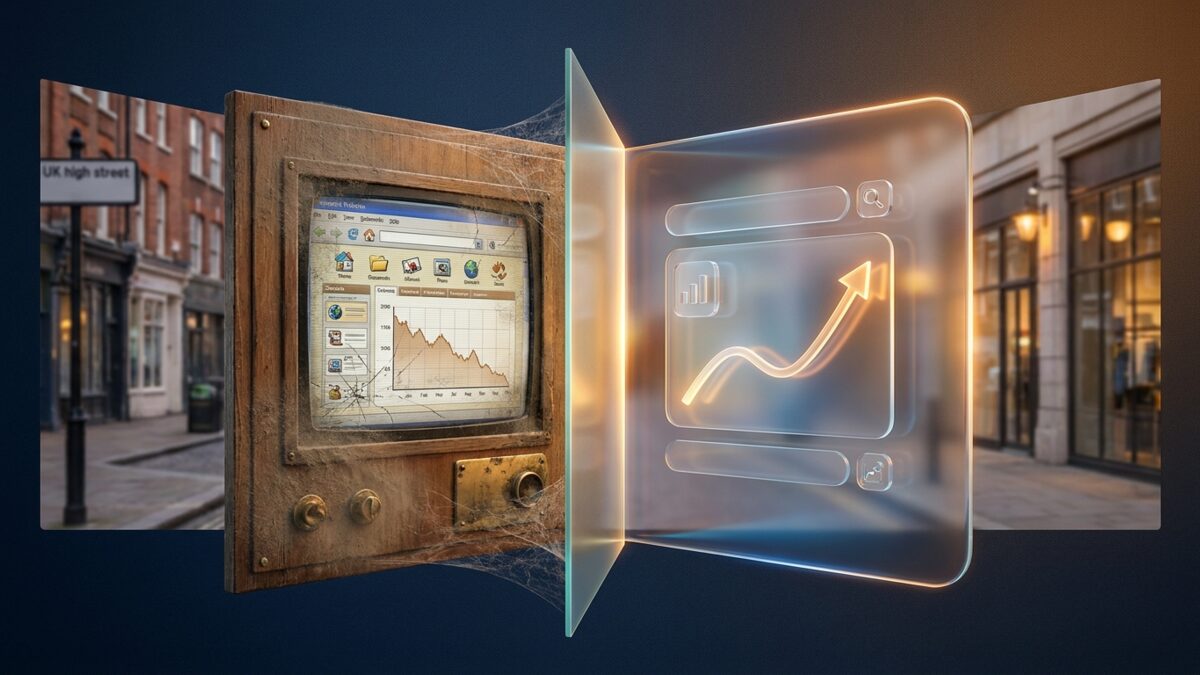
If your sales team lives in spreadsheets, your customer history is scattered across inboxes, and you are paying per-seat for software that still does not fit how you work, you have almost certainly outgrown your current tools. This is where custom CRM development in the UK earns its place: a system built around your pipeline, your data and your process, rather than one you bend your business to fit. As a CRM development company in the UK based in Stoke-on-Trent, we build bespoke platforms that pay for themselves in hours saved and deals recovered. In this guide we break down the features, the real 2026 cost bands, and the ROI you should expect before you commit a penny.
Signs you have outgrown your off-the-shelf CRM
Most UK businesses start with an off-the-shelf CRM because it is fast to switch on. That works until it doesn't. The warning signs are usually operational before they are financial:
- Your team keeps a "real" version of the data in a spreadsheet because the CRM cannot model your process.
- You pay for features you never use, while the one workflow you actually need is only available on a higher tier.
- Per-seat pricing means growing the team quietly grows your software bill every single month.
- Reporting requires exporting to Excel, because the built-in dashboards don't answer your questions.
- Integrations with your accounting, quoting or booking systems are brittle, partial, or locked behind expensive connectors.
- Onboarding a new hire takes days because the tool is generic and your process lives in people's heads.
If two or three of these sound familiar, you are not managing a CRM anymore — you are managing around it. That hidden overhead is the strongest argument for bespoke CRM software tailored to your operation. The friction is rarely dramatic; it is death by a thousand small workarounds that quietly slow every deal, every handover and every report. Once you total the wasted minutes and the missed follow-ups, the case for custom CRM development in the UK stops being a nice-to-have and becomes a straightforward operational decision.
What a custom CRM actually includes
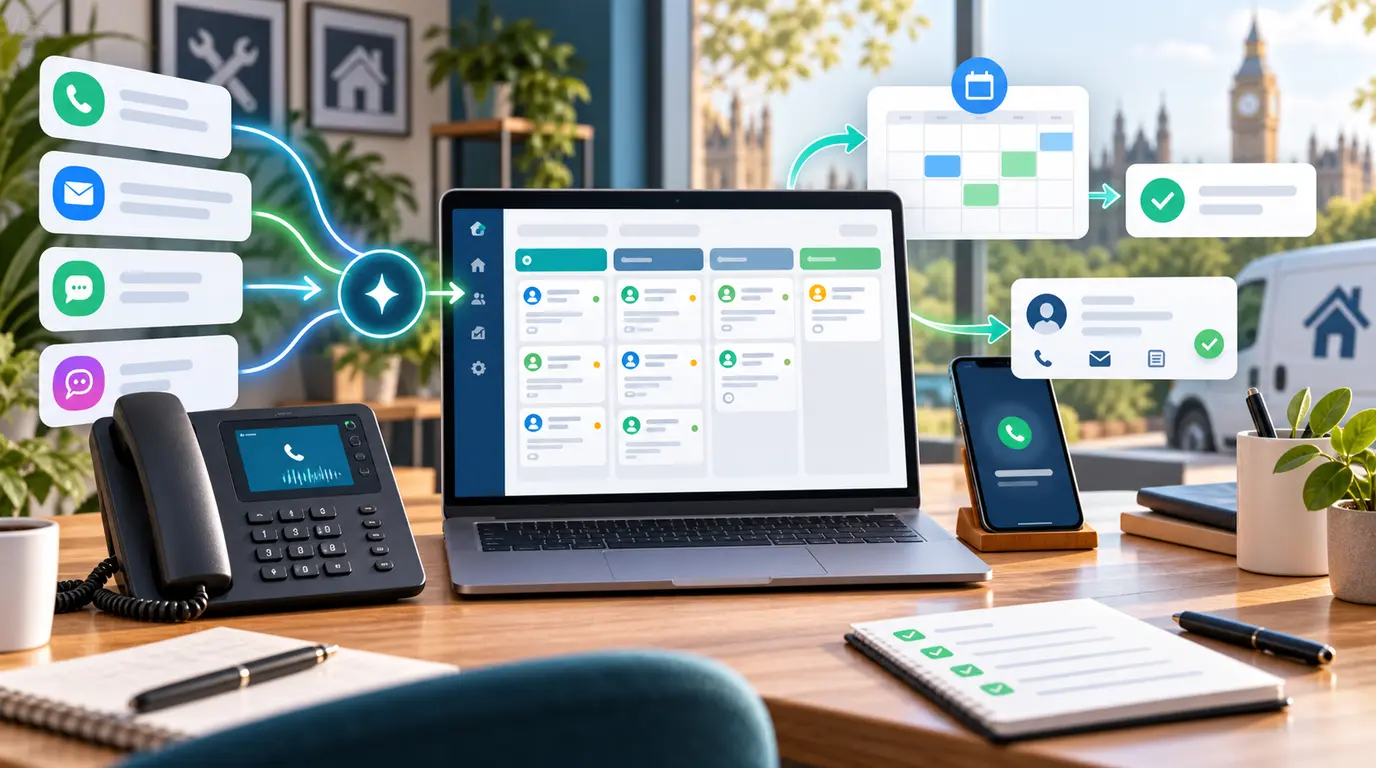
A well-built bespoke system is more than a contact list with a logo on it. When we scope a custom CRM development project for a UK client, the core almost always includes the following building blocks. The exact mix varies by sector — a professional services firm weights reporting and pipeline, while a field-service business leans on scheduling and job history — but the foundations below are near-universal.
Contact and account management
A single source of truth for every customer, lead, supplier and contact — with the fields, tags and relationships that match your industry, not a generic template. B2B firms get proper company-and-contact hierarchies; service firms get job history and site records.
Sales pipeline and deal tracking
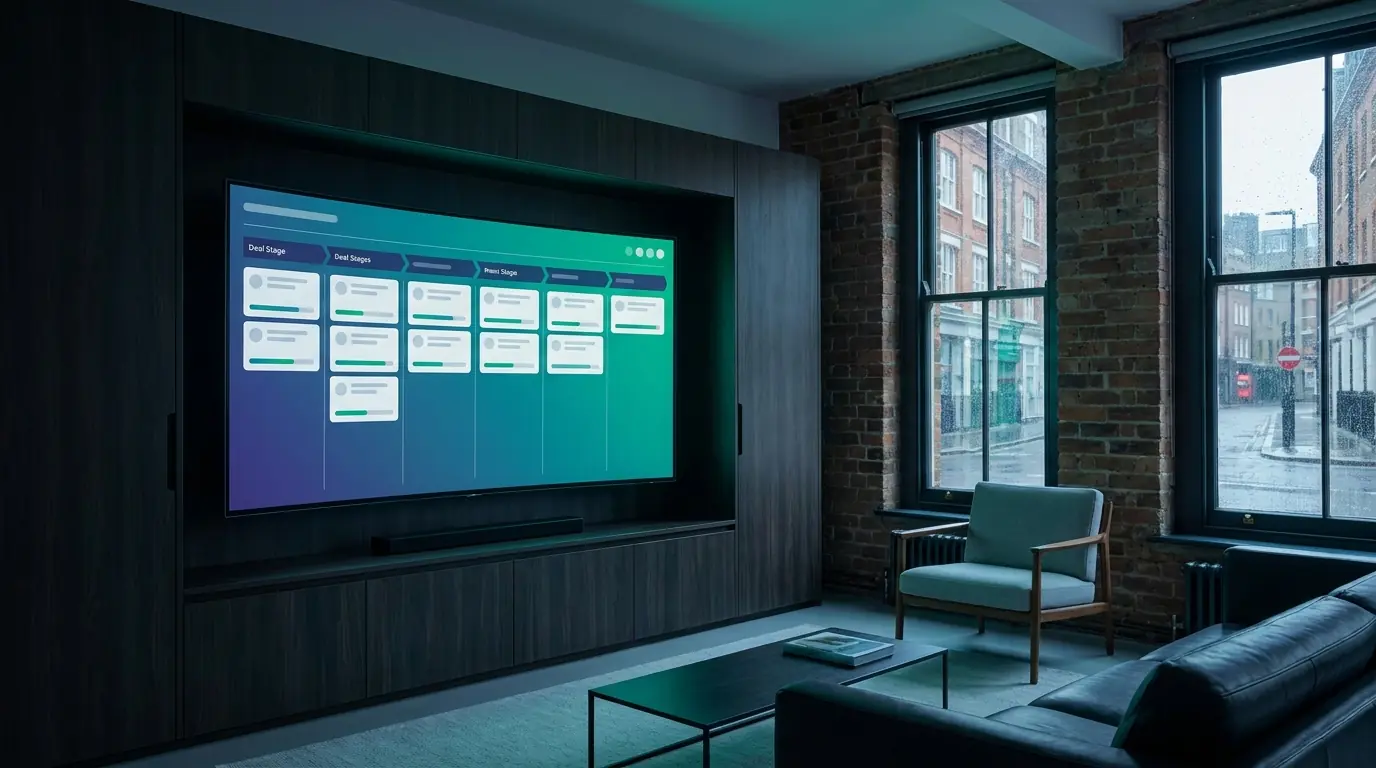
Pipelines modelled on how your business really sells: your stages, your qualification rules, your handoffs. Deals move through the process with automatic reminders, so nothing stalls silently in someone's inbox.
Workflow automation
The quiet ROI engine. Automated follow-ups, task assignment, status changes, document generation and email sequences remove the repetitive admin that eats your team's week. Automation is where a bespoke build beats a configured template, because the rules encode your exact process.
Roles, permissions and security
Granular access control so sales, support, finance and management each see what they should — and nothing they shouldn't. For UK businesses this also means GDPR-aligned data handling, audit trails and controlled data export baked in from day one.
Reporting and dashboards
Live dashboards answering the questions that actually run your business: pipeline value, conversion by source, rep performance, forecast accuracy, and the KPIs specific to your sector. No more exporting to spreadsheets at month end.
Integrations
Connections to the tools you already rely on — accounting (Xero, QuickBooks, Sage), email and calendar, e-commerce, telephony, and any internal systems. A custom CRM sits at the centre of your stack instead of bolting on beside it. If your data currently lives in spreadsheets, the same discipline applies as when moving a UAE business off spreadsheets: you migrate once, cleanly, and build the workflows around trusted data.
Custom vs Salesforce and HubSpot: cost, fit and ownership
The CRM vs off the shelf decision comes down to three things: fit, ownership and total cost over time. Off-the-shelf platforms like Salesforce and HubSpot are excellent products — but they are built for the average of thousands of companies, not for yours.
- Fit: Off-the-shelf CRMs make you adapt your process to their model, or pay for consultants to configure and customise them. A bespoke build starts from your process on day one.
- Ownership: With SaaS you rent access; with a custom CRM you own the software and the data outright. No vendor can change pricing, deprecate a feature you depend on, or hold your data hostage.
- Cost over time: Off-the-shelf looks cheap upfront, then scales with headcount forever. Custom has a higher upfront cost and a flat, predictable running cost — so the lines cross as you grow.
- The per-seat tax: A 20-person team on a mid-tier plan at roughly £60–£120 per user per month can spend £15,000–£29,000 a year on licences alone, before add-ons. That recurring spend never buys you an asset.
Here is the trade-off at a glance:
| Factor | Off-the-shelf (Salesforce / HubSpot) | Custom CRM (bespoke build) |
|---|---|---|
| Upfront cost | Low | Higher, one-off |
| Ongoing cost | Per user, forever, rising with the team | Flat hosting + support, predictable |
| Process fit | Adapt your business to the tool | Tool built around your business |
| Data ownership | Vendor-controlled | Fully yours |
| Scaling cost | Grows with every new seat | Marginal — add users freely |
Real 2026 custom CRM cost bands in the UK
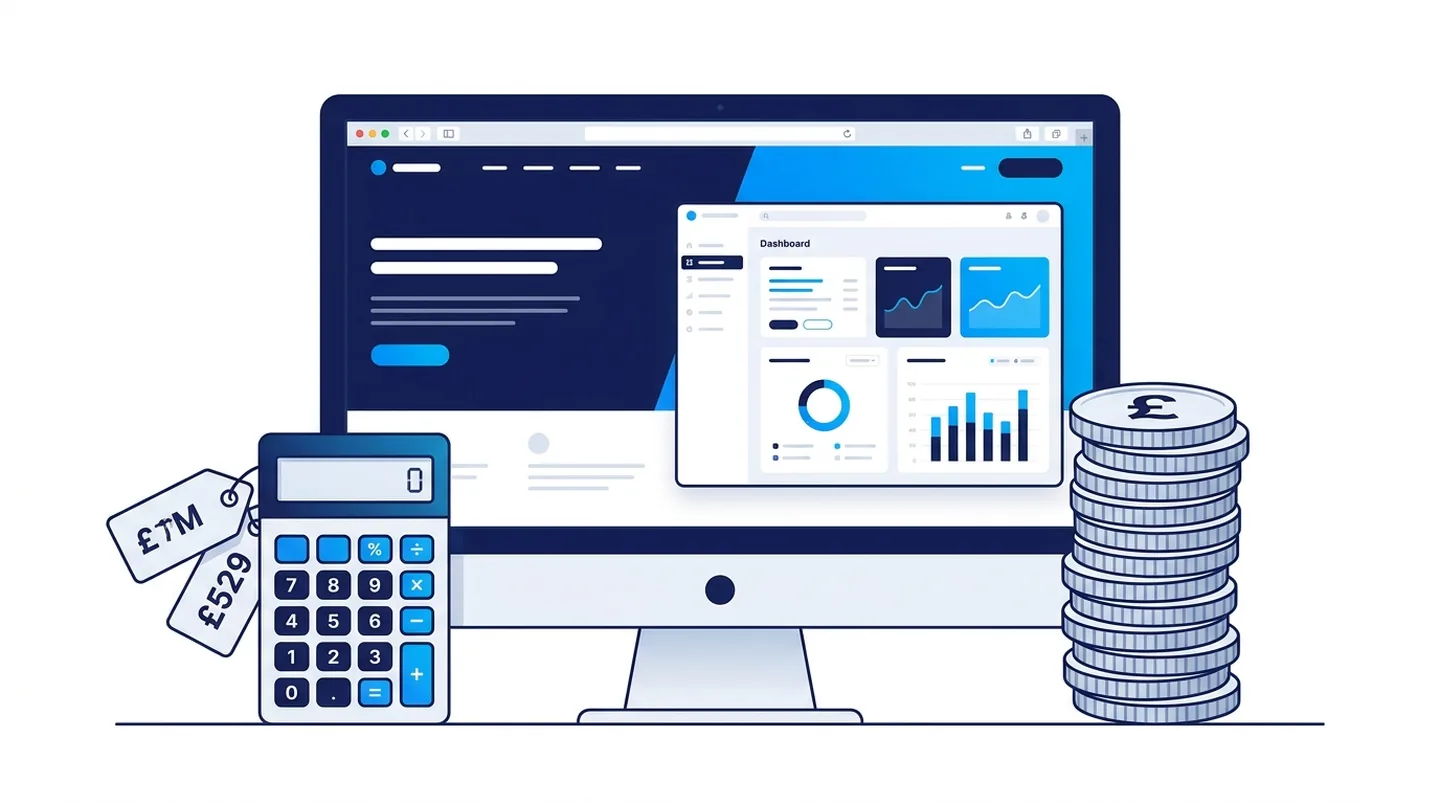
Straight answer on custom CRM cost in the UK: pricing depends on scope, integrations and complexity, but most projects fall into three clear bands in 2026. We quote fixed against a defined specification, so there are no open-ended day rates and no surprises at the end of a phase.
- Starter / MVP — £8,000 to £18,000. Core contacts, a configurable pipeline, basic automation, role-based access and essential reporting. Ideal for a small team replacing spreadsheets or a starter SaaS plan.
- Growth — £18,000 to £45,000. Everything in Starter plus deeper automation, multiple integrations (accounting, email, telephony), custom dashboards, and workflows across several departments.
- Enterprise / bespoke platform — £45,000 to £100,000+. Complex multi-team processes, advanced integrations, customer-facing portals, granular permissions and high-volume data handling.
Running costs are typically £50–£300 per month for hosting plus an agreed support and maintenance arrangement — a fraction of what an equivalent per-seat SaaS licence would cost a growing team, and with no per-user tax as you scale.
The ROI: where a custom CRM pays for itself
A bespoke CRM is an investment, not an expense, and the return shows up in three measurable places.
- Hours saved. Automating follow-ups, data entry, quoting and reporting typically claws back 5–10 hours per person per week. Across a 10-person team at a modest £30/hour, reclaiming even 5 hours each is worth roughly £78,000 a year in recovered capacity.
- Higher conversion. When no lead slips through the cracks and every follow-up fires on time, close rates rise. A few extra points of conversion on your existing pipeline often covers the entire build cost inside the first year.
- No per-seat tax. You stop paying to grow. Adding your eleventh, twentieth or fiftieth user costs nothing in licence fees, so the savings compound every year you keep scaling.
Put together, most Growth-band projects reach payback within 9 to 18 months, after which the system keeps returning value as an owned asset. That is the core reason UK businesses move from renting software to owning bespoke CRM software built for them.
Implementation phases: how we build it
A custom CRM should never be a big-bang gamble. We deliver in phases so you see value early and stay in control of scope and budget.
- Discovery. We map your process, data and pain points, and agree the priorities. This is where the specification — and the honest cost estimate — takes shape.
- Design and prototype. Wireframes and a clickable model of the core screens, so you validate the fit before code is written.
- Core build. We develop contacts, pipeline, roles and reporting first — the MVP that replaces your current tool.
- Automation and integrations. We layer in the workflows and connect your accounting, email and other systems.
- Data migration and testing. Your existing data is cleaned and imported, and the system is tested against real scenarios.
- Launch and iterate. We train your team, go live, and refine based on real use. Ongoing support keeps the system evolving with your business.
Many clients extend the same platform later — for example adding customer portal development for UK service firms so clients can log in, track jobs and self-serve, all sharing one trusted data source.

Mistakes to avoid
- Recreating your messy process in software. Use the build as a chance to streamline, not to enshrine bad habits.
- Skipping discovery to save money. Under-specified projects overrun. A clear spec is the cheapest insurance you will buy.
- Ignoring user buy-in. The best CRM is the one your team actually uses. Involve them early.
- Under-planning data migration. Dirty data imported badly undermines trust in the whole system from day one.
- Choosing on price alone. The cheapest quote often lacks the support and integration work that makes a CRM stick.
Key takeaways
- You have outgrown off-the-shelf CRM when your team works around it and per-seat fees keep climbing.
- A custom CRM covers contacts, pipeline, automation, roles, reporting and integrations — built to your process.
- Custom vs off-the-shelf comes down to fit, ownership and total cost over time; you own the asset outright.
- 2026 UK cost bands: £8k–£18k Starter, £18k–£45k Growth, £45k–£100k+ Enterprise.
- ROI comes from hours saved, higher conversion and no per-seat tax — payback typically in 9–18 months.
Frequently asked questions
How much does custom CRM development cost in the UK?
In 2026, most projects fall between £8,000 and £18,000 for a starter build, £18,000 to £45,000 for a growth-stage system, and £45,000 or more for an enterprise platform. The final figure depends on integrations, automation depth and the number of workflows involved. We give a fixed estimate after a discovery session.
Is a custom CRM better than Salesforce or HubSpot?
For businesses whose process does not fit a template, or who want to stop paying per-seat fees forever, yes. A bespoke CRM is built around how you actually work and you own it outright. Off-the-shelf platforms are a strong choice when your needs are standard and you want to switch on quickly.
How long does it take to build a bespoke CRM?
A starter system typically takes 6 to 10 weeks, while growth and enterprise builds run 3 to 6 months depending on scope. Because we deliver in phases, you get a usable core early rather than waiting for everything at once.
Can a custom CRM integrate with my accounting and email tools?
Yes. Integration with accounting systems such as Xero, QuickBooks and Sage, plus email, calendar, telephony and e-commerce platforms, is a standard part of our custom CRM development work. The CRM becomes the hub of your existing stack.
Do we own the software and data with a bespoke CRM?
Completely. Unlike SaaS subscriptions where you rent access, a custom CRM and all its data belong to you. No vendor can change pricing, remove features you depend on, or restrict access to your own information.
What is the ROI of a custom CRM?
The return comes from hours saved through automation, higher conversion from disciplined follow-up, and the elimination of per-seat licence fees as you grow. Most growth-band projects reach payback within 9 to 18 months and continue returning value as an owned asset.
Ready to build a CRM around your business?
If off-the-shelf software is holding your UK business back, a bespoke system built to your process will pay for itself in saved hours and recovered deals. As an experienced CRM development company in the UK, we will map your needs, give you an honest cost estimate, and show you exactly where the ROI comes from — with no obligation. Book a free discovery call with ARS Developer Ltd and let's scope your custom CRM.
Next Step Resources
Move from research into action with the most relevant service, proof, pricing, and project planning pages for this topic.
Tags:






















Leave a Comment
Ask a practical question, share a project insight, or add a useful note. Every comment is reviewed before it appears publicly.